
A fire pit changes the way you use your backyard. It extends your outdoor season from six months to ten, creates a natural gathering point for family and guests, and adds a focal element that anchors the rest of your landscape. In Central Virginia, where October evenings are crisp and spring nights can still carry a chill, a well-designed fire feature is not a luxury -- it is the difference between a backyard you use and one you look at through the window.
Snow's has been designing and building outdoor living spaces in Charlottesville and Albemarle County for over a century. We have installed fire features in every configuration -- from simple fieldstone rings on rural properties to architecturally integrated gas fire tables in resort-quality pool courtyards. This guide covers fifteen of the most effective fire pit designs for Virginia homes, along with practical guidance on materials, placement, safety, and cost.
Types of Fire Features
Before diving into specific designs, it helps to understand the three main categories of outdoor fire features and what each brings to a landscape.
Wood-Burning Fire Pits
The classic. Wood-burning pits deliver the full sensory experience -- crackling sounds, wood smoke scent, and the dancing flame pattern that gas cannot replicate. They are generally less expensive to build and require no utility connections. The tradeoffs are smoke management (your seating arrangement needs to account for prevailing wind), ash cleanup, and the need for a firewood supply. In many Charlottesville neighborhoods, wood-burning fire pits face no restrictions, but some HOAs limit them.
Gas Fire Features
Natural gas or propane fire features offer instant on/off convenience, no smoke, consistent flame height, and clean operation. They cost more to install (gas line runs typically add $1,500-$3,000 to a project) but less to operate over time if connected to natural gas. Gas fire features are the better choice for covered or semi-enclosed spaces where smoke would be a problem, and they work well in more formal outdoor living environments.
Combination Features
Some homeowners opt for both -- a wood-burning pit in a casual area of the yard for weekend bonfires and a gas fire table on the main patio for everyday evening use. This approach gives you the ambiance of real wood fire when you want it and the convenience of gas when you do not want to deal with firewood and cleanup.
15 Fire Pit Designs for Virginia Backyards
1. The Classic Stone Ring
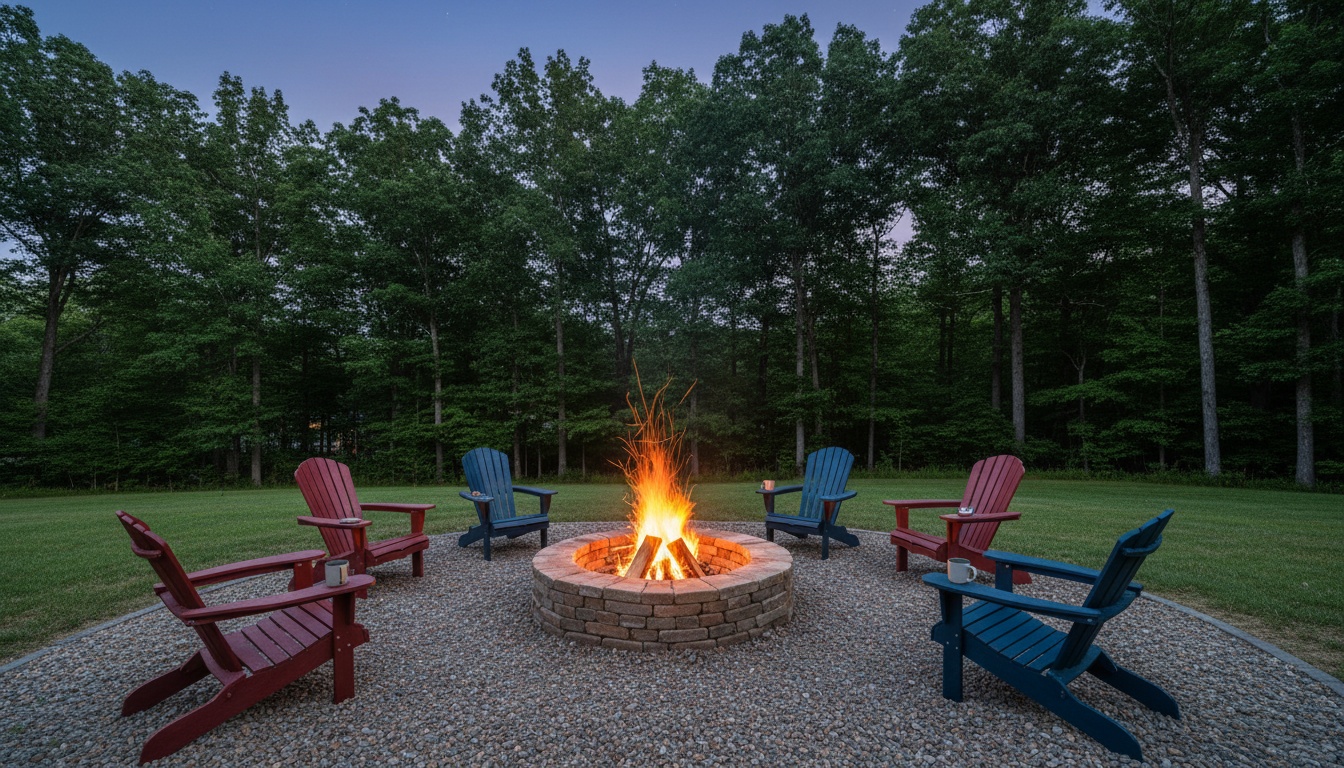
A circular fire pit built from stacked natural fieldstone, 36-42 inches in diameter, set on a compacted gravel base. This is the most timeless design and works on nearly any property. Use Virginia fieldstone for authenticity, and keep the wall height at 12-18 inches. Surround it with a 10-foot diameter gravel or flagstone pad for safety and seating. Cost range: $2,500-$5,000 installed.
2. Bluestone Patio with Integrated Fire Pit
A dry-laid or mortared bluestone patio with a built-in fire pit at the center or one end. The fire pit is constructed from the same bluestone, creating a seamless look. This design works beautifully on Charlottesville properties where bluestone is already used in walkways or other hardscape features. The patio becomes a defined outdoor room. Cost range: $15,000-$30,000 for patio and fire pit together.
3. Sunken Fire Lounge
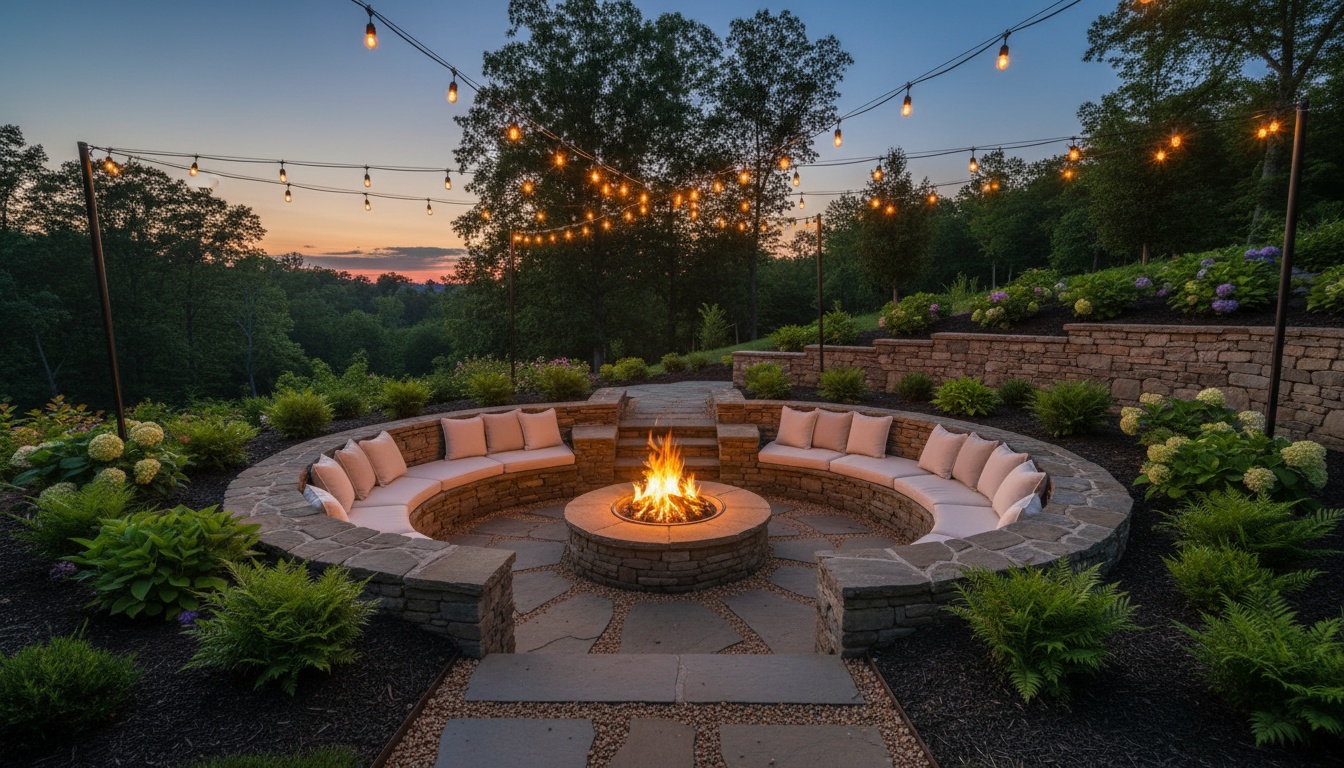
The fire pit is set 18-24 inches below grade in a circular or rectangular sunken seating area, with built-in stone benches around the perimeter. This design creates an intimate, sheltered space that blocks wind and makes cold-weather use more comfortable. It works exceptionally well on sloped properties common throughout Albemarle County, where the grade change can be incorporated naturally. Retaining walls double as backrests. Cost range: $20,000-$45,000.
4. The Linear Gas Fire Table
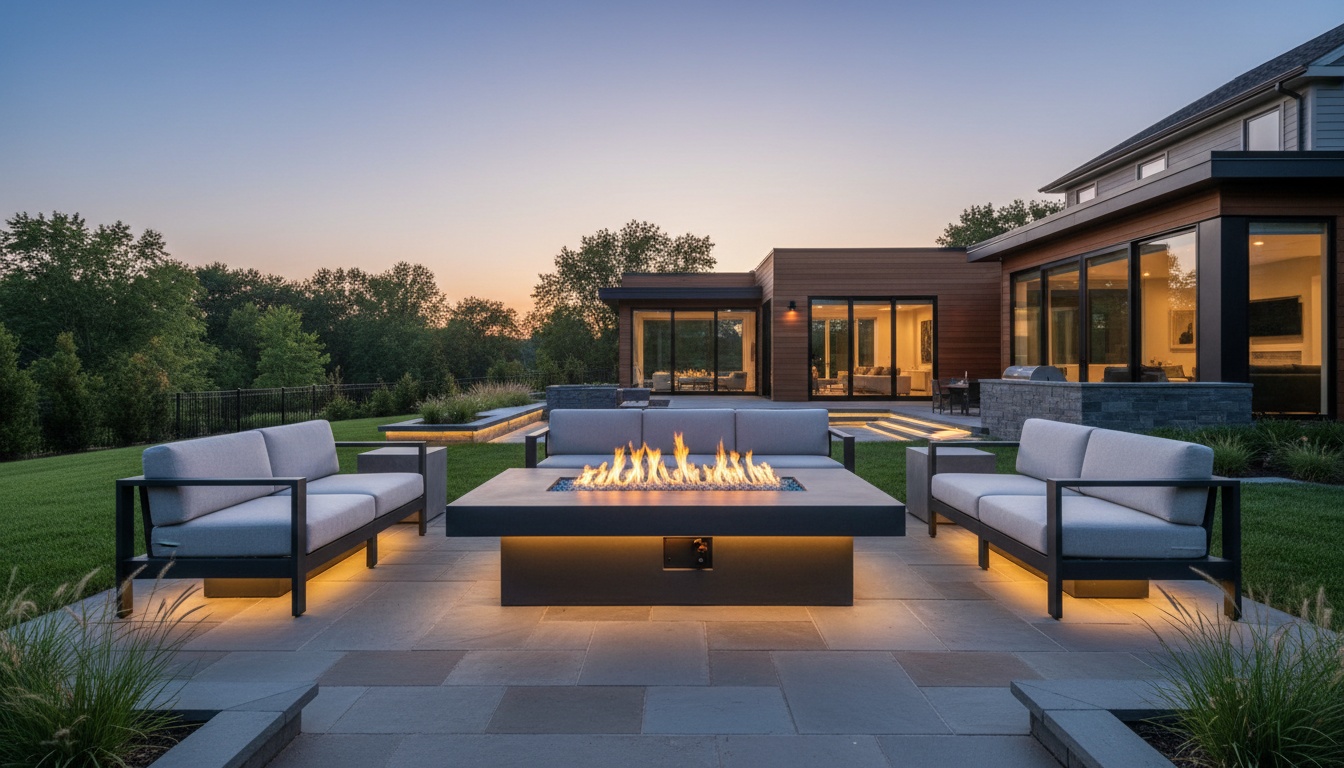
A rectangular fire table, typically 48-72 inches long, with a stainless steel gas burner running the length. Finished in natural stone, concrete, or stucco to match your outdoor living area. These are ideal for placing between two rows of outdoor sofas or along the edge of a dining terrace. The long flame line creates dramatic visual impact. Cost range: $5,000-$12,000 installed with gas connection.
5. Flagstone Patio Fire Pit with Seat Wall
An irregular flagstone patio with a central fire pit surrounded by a 16-18 inch high natural stone seat wall. The seat wall provides permanent seating for 8-12 people without the need for outdoor furniture and doubles as a retaining element on gently sloped sites. Top the seat wall with bluestone caps for a comfortable, flat seating surface. Cost range: $12,000-$25,000.
6. Pool-Side Fire Bowls
Elevated fire bowls (typically copper, concrete, or stone, 24-36 inches in diameter) positioned at corners or along the edge of a pool deck. These are gas-fired and designed to reflect off the water surface, creating a resort-quality atmosphere. They work best in pairs or sets of four for symmetry. Our pool and outdoor living team often incorporates fire bowls into new pool designs. Cost range: $3,000-$6,000 per bowl installed.
7. Rustic Fieldstone Fire Circle
A large-scale (5-6 foot diameter) fire circle built from oversized Virginia fieldstone boulders, set in a woodland clearing or at the edge of a meadow. No mortar -- the boulders are simply positioned and partially buried for stability. This is the right choice for rural Albemarle County properties where a polished hardscape would feel out of place. Adirondack chairs complete the look. Cost range: $3,000-$7,000.
8. Outdoor Fireplace
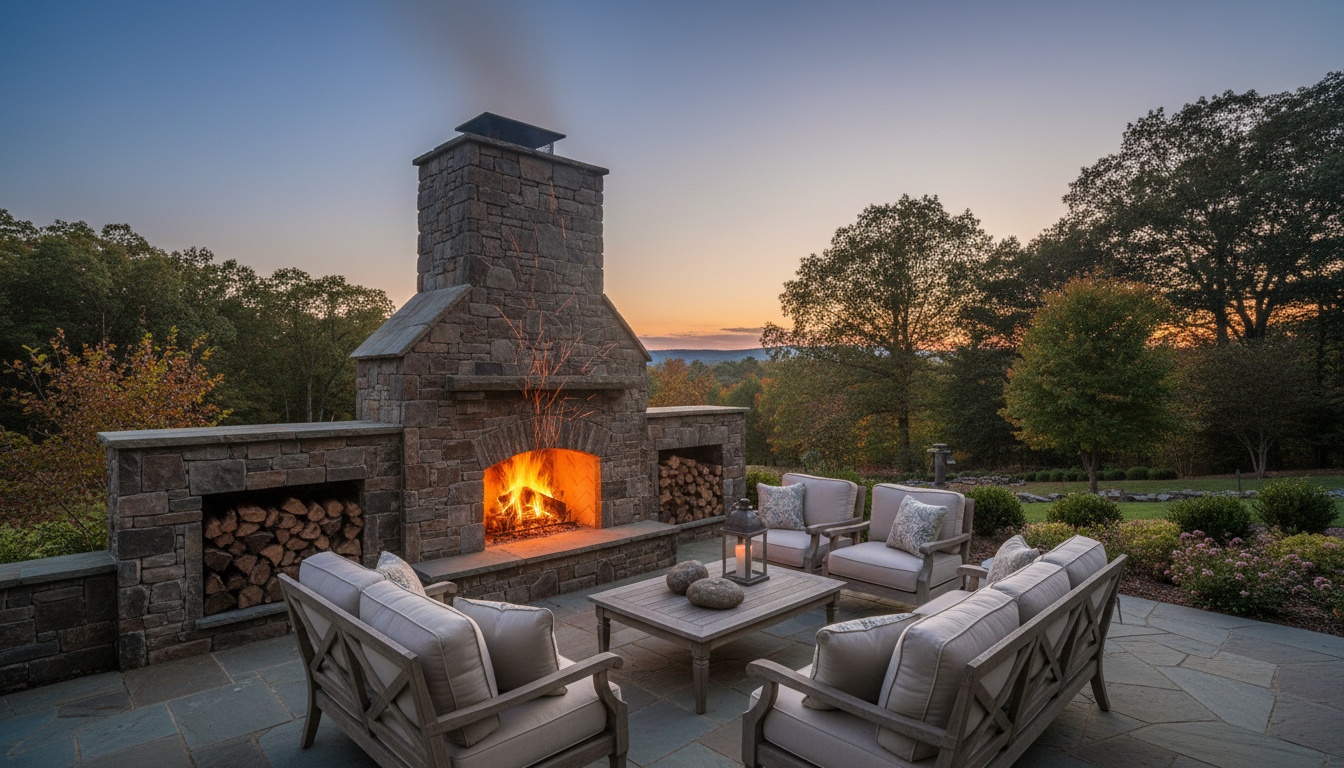
A full masonry fireplace, typically 6-8 feet tall with a chimney, built from natural stone or brick. Outdoor fireplaces create a true focal wall for an outdoor living room and direct smoke upward rather than into guests' faces. They are more expensive than fire pits but offer a level of architectural presence that a pit cannot match. Ideal for properties with covered outdoor living spaces. Cost range: $15,000-$40,000.
9. The Conversation Fire Pit
A round gas fire pit, 42-48 inches in diameter, set at coffee-table height (18-20 inches) in the center of a curved sectional sofa arrangement. The fire pit doubles as a table surface when the fire is off. This design prioritizes social use -- it is built for conversation, not bonfire-scale flames. The gas burner is typically topped with fire glass or lava rock. Cost range: $4,000-$8,000 for the fire pit; seating separate.
10. Terraced Fire Feature
On a sloped property, a series of stone-walled terraces step down to a fire pit at the lowest level, creating amphitheater-style seating. Each terrace level serves as seating with stone-capped retaining walls. This design is particularly effective on the rolling terrain common in Keswick, Farmington, and western Albemarle. It transforms a grading challenge into the most compelling feature on the property. Cost range: $30,000-$60,000.
11. Fire Pit with Pergola
A gas fire pit positioned beneath a timber or aluminum pergola with string lights or pendant fixtures overhead. The pergola defines the space vertically and provides a framework for lighting, climbing plants, and optional shade fabric. This works well for homeowners who want a sense of enclosure without a full roof structure. Keep the fire pit gas-fueled (not wood-burning) to prevent heat damage to the pergola. Cost range: $15,000-$30,000 for fire pit and pergola.
12. Kitchen Fire Table
A linear gas fire table integrated into an outdoor kitchen island, serving as both a cooking-adjacent warming feature and a visual anchor. Position it at the bar-seating side of the island so guests gathered at the counter enjoy the fire while the cook works the grill. This design is ideal for homeowners who entertain frequently and want their fire feature to be part of the cooking and dining experience rather than a separate destination. Cost range: $8,000-$15,000 as part of a larger kitchen project.
13. Fire and Water Combination
A stone wall or raised planter with fire features (small gas burners) flanking a water feature (a spillway, fountain, or sheer descent). The contrast of fire and water creates high visual drama. These combination features work well as focal points visible from inside the home -- position them where they can be enjoyed through a window during months when you are not outside. Cost range: $12,000-$25,000.
14. The Portable Fire Pit
A high-quality steel or cast-iron portable fire pit (brands like Breeo or Solo Stove have elevated this category) set on a permanent hardscape pad. This gives you the flexibility to reposition the fire feature seasonally or for events, while the dedicated pad ensures safety and aesthetics. The pad should be at least 8 feet in diameter, built from gravel, pavers, or flagstone. Cost range: $500-$2,000 for the pit plus $2,000-$5,000 for a proper pad.
15. The Estate Fire Court
A formal courtyard space -- typically 20x20 feet or larger -- with a central fire feature (round pit or square fire table), surrounded by symmetrical plantings, low stone walls, and architectural lighting. This is the most finished, room-like fire feature design and suits properties where the outdoor space is treated as a true extension of the home's interior. Our hardscaping team designs fire courts that complement the architecture of the home. Cost range: $40,000-$80,000+.
Fire Pit Placement and Safety
Proper placement is not just about aesthetics. It is about safety, comfort, and compliance with local codes.
Setback Requirements
Albemarle County and the City of Charlottesville require open-flame fire features to be set back a minimum of 15 feet from any structure (including your house, garage, shed, and fence lines), and 25 feet from any overhead obstruction like tree branches or utility lines. Gas fire features with approved enclosures may have reduced setback requirements. Always verify current requirements with your local building department before construction begins.
Wind Considerations
In Central Virginia, prevailing winds come from the west and southwest. Position seating on the east or northeast side of a wood-burning fire pit so smoke blows away from guests most of the time. For properties with significant wind exposure (hilltop sites are common in Albemarle County), consider a sunken design or a solid seat wall on the windward side to create a sheltered zone.
Surface Material
The area surrounding a fire pit should be non-combustible. Natural stone, gravel, concrete, and brick are all appropriate. Do not place a fire pit on a wood deck or directly on mulch. A minimum 4-foot apron of non-combustible material should surround the pit on all sides.
Drainage
A fire pit sitting in a low spot will collect rainwater and become a muddy mess. Grade the surrounding area to drain away from the pit, or install a French drain beneath a hardscape pad. Virginia's clay soils drain slowly, so proper grading is especially important here.
Landscaping Around Fire Pits
The landscape surrounding a fire feature should enhance the experience without creating safety hazards.
Plants
Keep combustible plant material at least 8 feet from the fire pit edge. Ornamental grasses, while beautiful, are highly flammable when dormant -- position them outside the safety zone. Good choices for fire pit borders include low-growing sedums, creeping thyme (which releases fragrance when stepped on), and evergreen groundcovers like pachysandra or native wild ginger. For screening and backdrop, use evergreen shrubs like inkberry holly or arborvitae set at least 10 feet back from the fire.
Lighting
Landscape lighting extends fire pit use into the evening and improves safety on walkways and steps. Low-voltage path lights along the approach, step lights on any grade changes, and subtle uplighting on nearby trees create depth and ambiance. Avoid bright overhead lights near the fire pit itself -- they compete with the fire's glow and diminish the atmosphere.
Seating
The most comfortable seating height for fire pit use is 16-18 inches. Built-in stone seat walls at this height eliminate the need for furniture and create a permanent, maintenance-free seating solution. For loose furniture, Adirondack chairs (30 inches from the pit edge) and deep-seated outdoor sofas (36 inches from the edge) both work well. Plan seating for 6-10 people -- fire pits are social spaces.
Materials: Choosing the Right Stone
Material choice affects aesthetics, longevity, and cost. Here is what works well in Central Virginia:
- Virginia Fieldstone -- Locally sourced, naturally weathered, and available in warm gray and tan tones. Best for rustic and traditional styles. Irregular shapes create organic-looking walls. $8-$15 per square foot of wall face.
- Pennsylvania Bluestone -- Clean lines, blue-gray color, and thermal finish options for a more refined look. Works equally well in traditional and contemporary settings. $15-$25 per square foot.
- Limestone -- Warm cream and tan tones. Excellent for Mediterranean and transitional styles. Softer than bluestone, so it develops a beautiful patina with age. $12-$20 per square foot.
- Concrete Block (Veneered) -- Modular concrete fire pit kits veneered with natural stone offer a faster installation and lower cost while still achieving a natural stone appearance. $6-$12 per square foot.
- Corten Steel -- Weathering steel that develops a rich rust patina. Contemporary aesthetic. Used for fire bowls and modern fire tables. $3,000-$8,000 for a finished fire feature.
Important note: not all natural stone is safe for fire pit construction. Avoid river rock and other stones that may contain trapped moisture -- these can crack or even explode when heated. Dense, dry stones like granite, bluestone, and limestone are the safest choices.
How Fire Features Affect Property Value
According to the National Association of Realtors, outdoor fire features consistently rank among the most desired outdoor amenities for homebuyers. In the Charlottesville real estate market, where outdoor living is a significant selling point, a well-designed fire feature can increase property value by 6-12% of the project cost. More importantly, fire features increase the perceived quality and completeness of an outdoor living space, which helps properties sell faster.
The key word is "well-designed." A cheap portable fire pit on a bare patch of grass adds nothing to your property value. A professionally built stone fire pit integrated into a cohesive landscape and hardscape plan is an investment that pays dividends for as long as you own the home and accelerates the sale when you decide to move.
Year-Round Use in Virginia's Climate
Central Virginia's climate makes fire features usable roughly 10 months of the year. Here is how each season works:
- Spring (March - May) -- Cool evenings in the 45-60 degree range are perfect fire pit weather. This is when you will use it most.
- Summer (June - August) -- Too hot for fire on most nights, but a fire feature's visual presence still anchors your outdoor space. Gas fire tables can be used at low flame for ambiance on milder evenings.
- Fall (September - November) -- Peak fire pit season. Cool air, football weekends, and the scent of wood smoke against fall foliage. This is what you build a fire pit for.
- Winter (December - February) -- Usable on milder winter days (40+ degrees) with adequate wind protection. A sunken fire lounge or a design with wind-blocking seat walls extends winter use significantly. Some of our clients use their fire pits through Christmas and into January.
Cost Summary by Fire Feature Type
These ranges reflect typical installed costs in the Charlottesville area, including materials, labor, and gas line connections where applicable:
- Simple stone fire pit (wood-burning): $2,500-$7,000
- Gas fire table: $5,000-$15,000
- Fire pit with integrated patio: $15,000-$35,000
- Sunken fire lounge: $20,000-$45,000
- Outdoor fireplace: $15,000-$40,000
- Fire and water combination: $12,000-$25,000
- Estate fire court: $40,000-$80,000+
These numbers will vary based on material choices, site conditions (access, grading, utility distances), and project complexity. We provide detailed proposals with fixed pricing before any work begins.
Getting Started with Your Fire Feature
The best fire pit projects start with a site visit. Every property has different conditions -- slope, sun exposure, proximity to the house, existing hardscape, utility locations, and soil type all influence the design. Our outdoor living design team will walk your property, discuss how you want to use the space, and develop a design that fits both your vision and your site.
If you are considering a fire feature as part of a larger outdoor living project -- patio, pool, outdoor kitchen -- we recommend designing everything together. A cohesive plan costs less to build than adding features piecemeal, and the result looks intentional rather than assembled.
Contact Snow's to schedule a site visit and start designing your fire feature. We build year-round in Central Virginia, and most fire pit projects can be completed in two to four weeks once materials are sourced.