
A stone patio is the foundation of an outdoor living space. It defines the room, sets the aesthetic tone, and -- if built correctly in Central Virginia's climate -- will last decades with minimal maintenance. Stone has been the material of choice for Virginia's most distinguished properties since the colonial era, and for good reason: it ages beautifully, handles freeze-thaw cycles, and connects a home to the natural landscape in a way that concrete and composite materials simply cannot.
Snow's has been building stone patios and terraces in Charlottesville and Albemarle County since 1912. We have set bluestone on Farmington estates, laid flagstone courtyards in Keswick, and built travertine pool decks in Glenmore. This guide draws on that experience to help Virginia homeowners choose the right stone, the right layout, and the right construction method for their property.
Stone Types for Virginia Patios
Not all stone performs equally in Central Virginia's climate. Our region experiences roughly 60 freeze-thaw cycles per winter, summer temperatures above 90 degrees, and annual rainfall around 45 inches. The stone you choose needs to handle all of it.
Bluestone
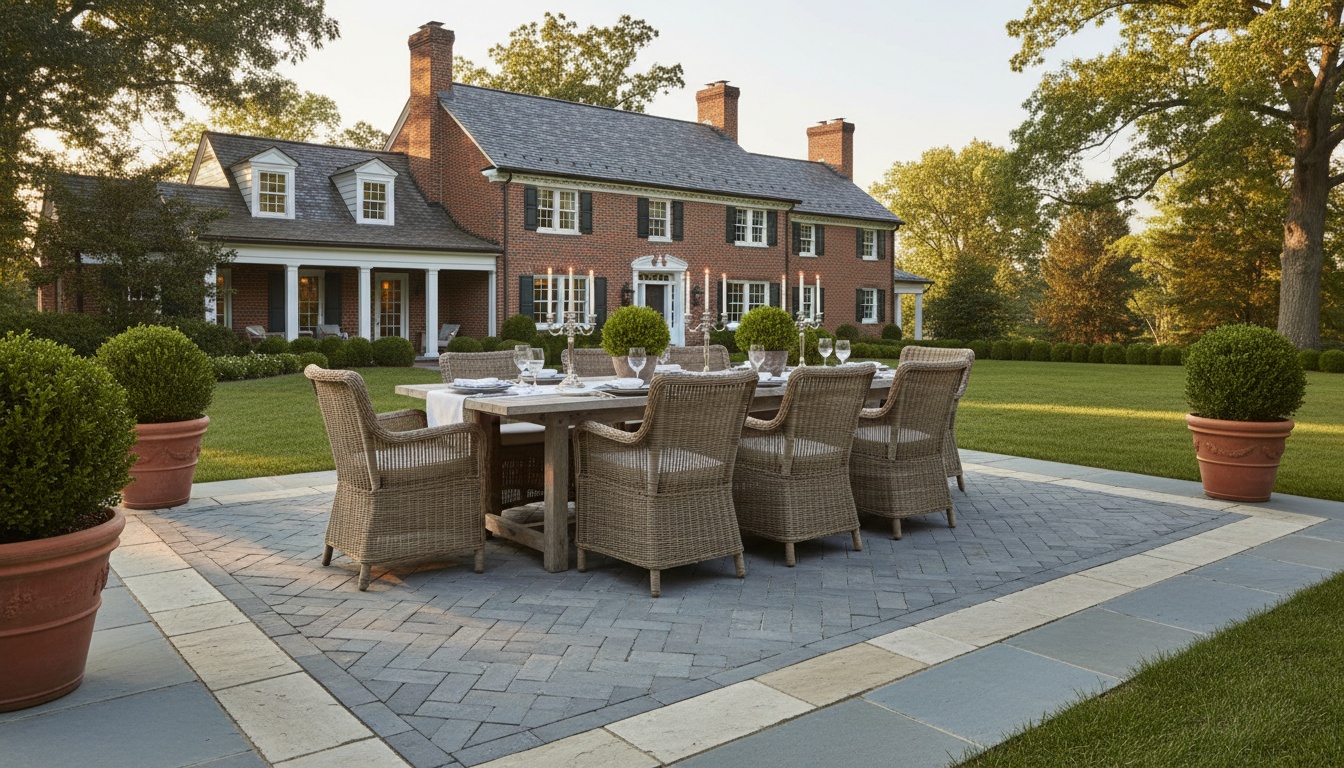
Pennsylvania bluestone is the gold standard for patios in the Mid-Atlantic. Its blue-gray color (with natural variations that include green, lilac, and rust tones) complements Virginia's architectural palette perfectly. Bluestone is dense, slip-resistant, and extremely durable in freeze-thaw conditions. It is available in both irregular (natural cleft) and thermal (smooth, sawn) finishes.
- Best for: Traditional, colonial, transitional, and farmhouse-style homes
- Finish options: Natural cleft (textured surface), thermal (smooth, uniform), tumbled (aged appearance)
- Thickness: 1.5 inches minimum for dry-laid, 1 inch for mortared applications
- Cost: $18-$30 per square foot installed (dry-laid); $25-$40 per square foot installed (mortared on concrete base)
- Durability: Excellent. Dense enough to resist water absorption, which prevents frost damage. Properly installed bluestone patios last 50+ years.
Flagstone
Flagstone is a general term for any flat, sedimentary stone split into slabs. In Virginia, the most common flagstone varieties are Pennsylvania bluestone (technically a flagstone), Virginia quartzite, and sandstone. Irregular flagstone creates a naturalistic look with visible joints filled with gravel, ground cover, or polymeric sand.
- Best for: Rustic, cottage, and naturalized landscape styles
- Finish: Natural irregular edges and surface
- Thickness: Varies from 1 to 3 inches; select pieces of uniform thickness for easier installation
- Cost: $14-$25 per square foot installed (dry-laid on compacted base)
- Durability: Varies by stone type. Dense quartzite and bluestone flagstone are excellent. Softer sandstones may flake or spall after several years of freeze-thaw exposure. Ask your supplier about the stone's absorption rate -- lower is better for Virginia.
Travertine
Travertine is a limestone formed by mineral deposits. It has a warm, cream-to-gold color palette and a naturally pitted surface that provides excellent traction around pools. Travertine has become increasingly popular for high-end pool decks and outdoor living spaces in Charlottesville because it stays cooler underfoot than most stones in direct sun.
- Best for: Mediterranean, contemporary, and resort-style properties; pool surrounds
- Finish options: Honed (smooth), tumbled (aged), brushed
- Thickness: Typically 1.25 inches in paver format
- Cost: $20-$35 per square foot installed
- Durability: Good, but requires sealing in Virginia's climate. Travertine is more porous than bluestone, so unsealed travertine can absorb water and suffer frost damage. Annual or biannual sealing addresses this.
Limestone
Limestone offers a softer, warmer aesthetic than bluestone. Colors range from cream and buff to light gray. Indiana limestone and Tennessee limestone are the most common varieties used in Virginia. Limestone develops a beautiful patina over time and pairs well with both traditional and contemporary architecture.
- Best for: Estate properties, formal gardens, transitional architecture
- Finish options: Honed, sawn, natural cleft
- Thickness: 2 inches recommended for Virginia's climate
- Cost: $22-$38 per square foot installed
- Durability: Moderate to good. Limestone is softer than bluestone and more susceptible to staining from organic matter (leaves, berries). Some varieties perform better in freeze-thaw conditions than others. We recommend selecting limestone with a low absorption rate and applying a penetrating sealer.
Granite
Granite is the hardest and most durable natural stone option. It is available in a wide range of colors (gray, black, rust, pink) and is virtually impervious to moisture, staining, and frost damage. Its density makes it more expensive to cut and install, but the long-term durability is unmatched.
- Best for: Contemporary and modern homes, commercial applications, high-traffic areas
- Finish options: Flamed (textured for grip), polished, sawn
- Cost: $25-$45 per square foot installed
- Durability: The best. Granite will outlast every other material on this list.
Patio Layout Ideas
The layout of your stone patio determines how the space feels and functions. Here are the most effective designs we build in Central Virginia.
The Classic Rectangle
A rectangular patio, typically 12x16 feet to 16x20 feet, set directly off the back of the house. This is the most common layout and the most efficient use of stone. Rectangular patios work well for dining, and their clean lines complement colonial and traditional architecture. For visual interest, use a running bond or herringbone pattern rather than a simple grid. Add a contrasting stone border (dark bluestone with a lighter limestone edge, for example) to frame the space.
The Extended L-Shape
An L-shaped patio wraps around a corner of the house, creating two distinct zones -- typically a dining area off the kitchen and a lounging area off the living room or master bedroom. This layout works well for larger homes and allows each zone to have its own character. The transition point between the two wings is an ideal location for a fire feature or planter.
The Multi-Level Terrace
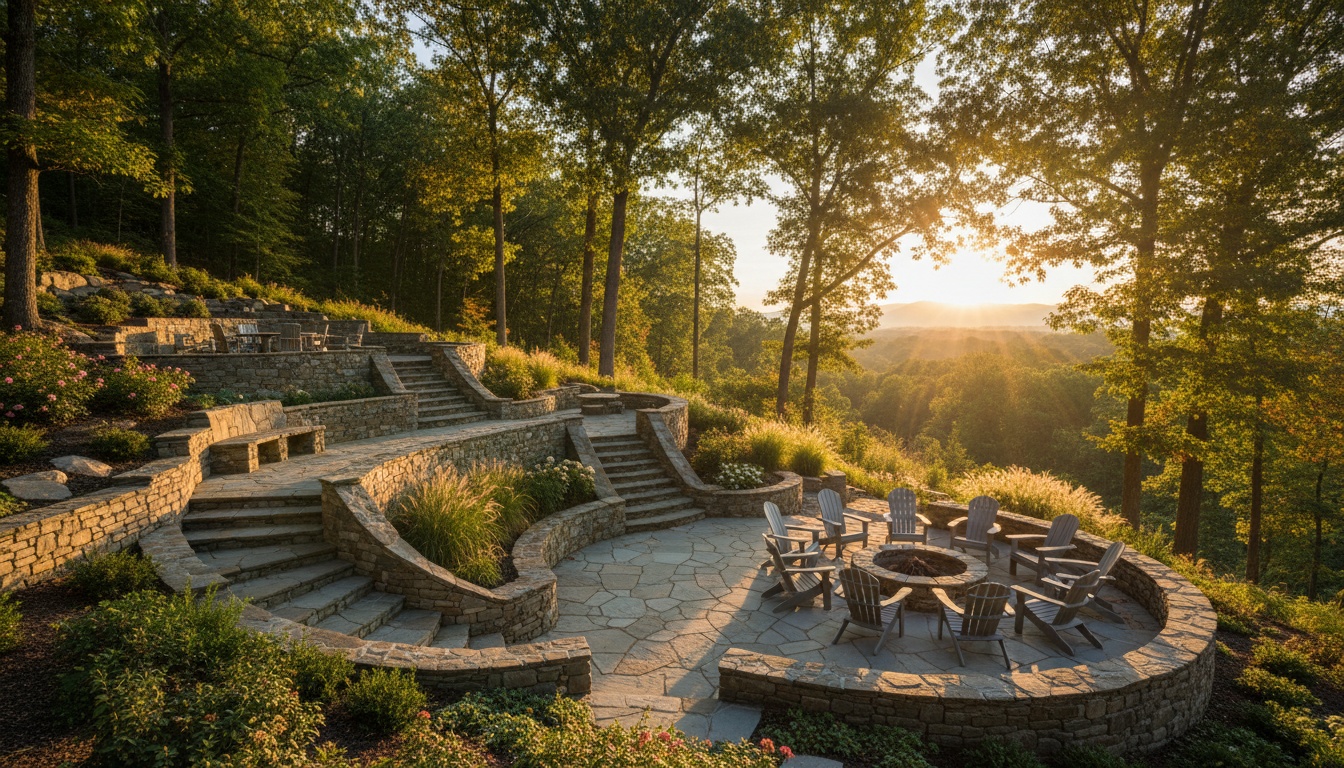
On sloped properties (and nearly every property in Albemarle County has some slope), a multi-level terrace converts unusable grade into a series of functional outdoor rooms. Each level is connected by stone steps and separated by retaining walls that double as seat walls or planter edges. The upper level might serve as a dining terrace off the house, a middle level as a lounge with a fire pit, and a lower level as a lawn access point or garden overlook. This is our most-requested layout for Charlottesville-area homes, and our hardscaping team has extensive experience engineering terraced stone systems on Virginia's clay soils.
The Curved Patio
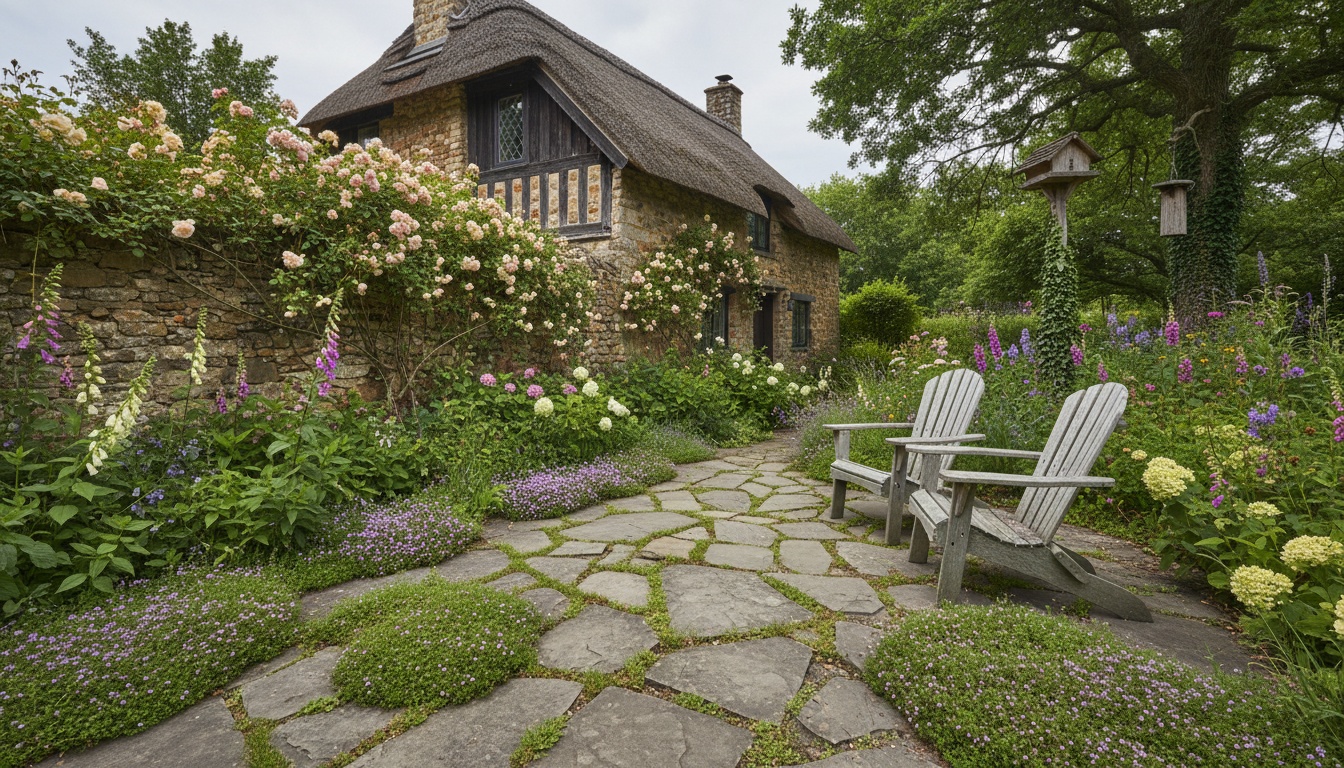
Curvilinear layouts soften the geometry of the house and create a more organic relationship with the surrounding landscape. Irregular flagstone is the natural material choice for curved patios, as the irregular edges follow curves more gracefully than sawn stone. Curved patios work particularly well when wrapping around mature trees, following the edge of a garden bed, or creating a circular seating area around a fire pit.
The Courtyard
An enclosed or semi-enclosed patio surrounded by walls, plantings, or structures on three or four sides. Courtyards create a strong sense of enclosure and privacy. In Virginia, where properties often have neighboring sight lines, a courtyard patio can feel like a private garden room. Stone walls (3-4 feet high), evergreen hedges, or the house itself provide the enclosure. A small water feature or specimen tree at the center adds a focal point.
The Wrap-Around
A patio that wraps the full width of the house's rear facade, sometimes extending around one or both sides. This layout maximizes outdoor living space and provides access from multiple rooms. Use the width to create a generous dining area (at least 12 feet deep for a table and circulation) with lounge space at the ends. Wrap-around patios are ideal for homes that host large gatherings and for properties with panoramic views that you want to enjoy from multiple vantage points.
Combining Stone Patios with Other Features
The best outdoor living spaces integrate multiple elements into a cohesive plan. A stone patio alone is a surface. A stone patio with a fire feature, outdoor kitchen, and thoughtful plantings is an outdoor room.
Outdoor Kitchens
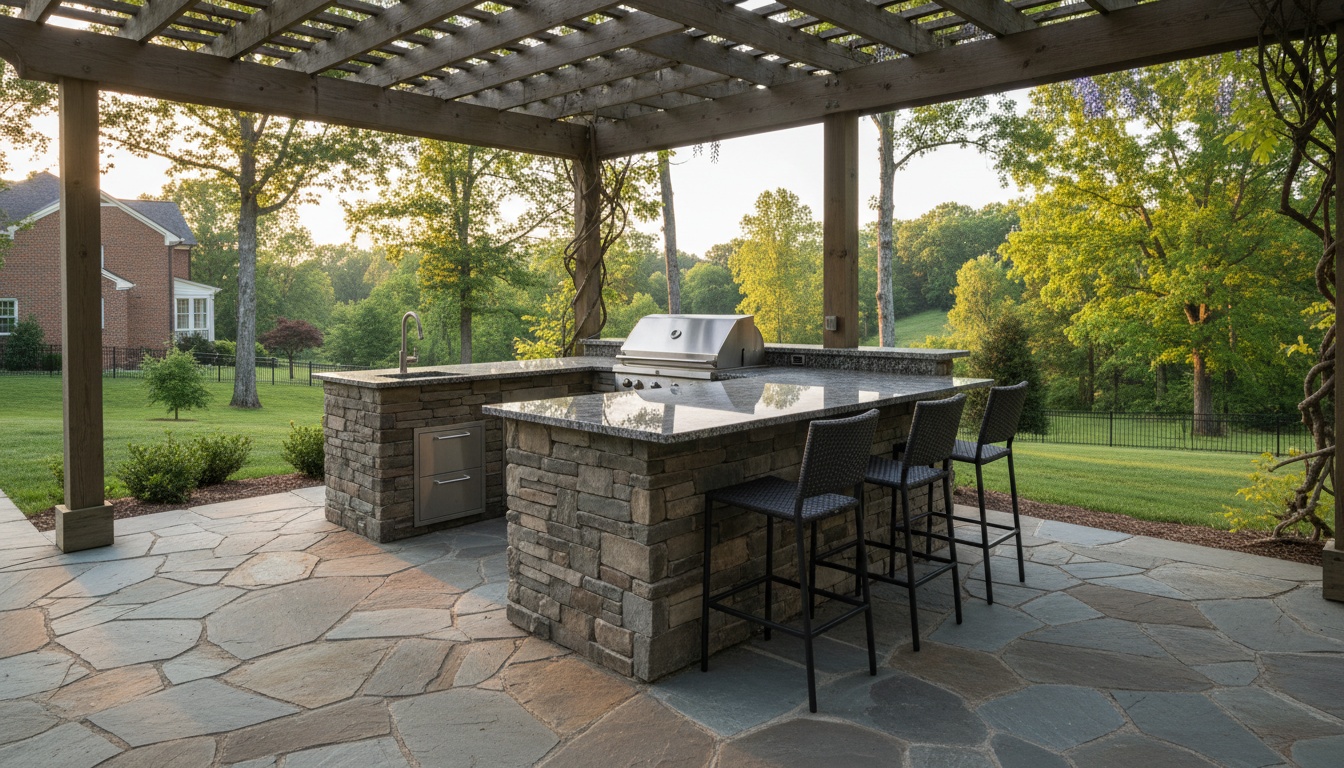
Stone patios provide the ideal foundation for outdoor kitchens. The kitchen island (typically built from concrete block and veneered with the same stone as the patio) should be positioned to keep the cook facing guests, with bar seating on the social side. Allow at least 36 inches of clearance on all working sides of the island. A stone countertop (granite is the most durable choice for outdoor kitchens) ties the kitchen to the patio visually.
Pool Integration
Stone patios extend naturally into pool decks. For pool surrounds, choose a stone with good slip resistance and low heat absorption -- travertine and thermal bluestone are both excellent choices. The patio-to-pool transition should feel seamless, with the same stone running from the main patio to the pool coping. Our pool design team coordinates stone selection between the patio and pool deck to ensure a unified look.
Fire Features
Fire pits and fire tables built from the same stone as the patio create a cohesive look. Position fire features at least 15 feet from the house and any combustible structures. A fire pit at the far end of a patio creates a destination that draws people into the space and establishes a second seating zone away from the dining area.
Pergolas and Shade Structures
A pergola anchored to the patio defines an overhead plane and creates a sense of architectural enclosure. Cedar and pressure-treated timber are the most common pergola materials in Virginia. The pergola posts should sit on stone piers or footings that tie into the patio structure -- never directly on the stone surface, which can cause cracking.
Natural Stone vs. Concrete Pavers
This is the most common question homeowners ask, and the answer depends on your priorities.
Natural Stone Advantages
- Each piece is unique -- no two stones are identical
- Ages beautifully with a natural patina
- Higher perceived value and stronger impact on property appraisal
- Connects visually to the natural landscape
- Repairable -- individual stones can be reset or replaced without disturbing the rest
Concrete Paver Advantages
- Lower material cost (typically 30-40% less than natural stone)
- Uniform thickness makes installation faster
- Wide range of colors, shapes, and patterns
- Interlocking systems provide structural stability
- Easier to source quickly for time-sensitive projects
Our Recommendation
For most Charlottesville-area properties, natural stone is the better long-term investment. Concrete pavers can look good initially but tend to fade, shift, and develop a worn appearance within 10-15 years. Natural stone looks better with age. Over a 30-year ownership period, the higher upfront cost of natural stone is offset by lower maintenance costs and better aesthetics. For homeowners on a budget, we often recommend using natural stone on the main patio and pavers for secondary areas like walkways or utilitarian zones.
Virginia Climate Considerations
Building a patio that lasts in Central Virginia requires attention to several climate-specific factors.
Freeze-Thaw Performance
Water that penetrates stone or gets trapped beneath it will expand when frozen, causing cracks, spalling, and heaving. To prevent this:
- Choose dense, low-absorption stone. Bluestone and granite absorb less than 1% of their weight in water. Some sandstones absorb 5% or more and will deteriorate quickly.
- Build on a proper base. A minimum 6-inch compacted gravel base (we typically use 8-10 inches) provides drainage beneath the stone and prevents frost heave.
- Ensure positive drainage. The patio surface should slope away from the house at a minimum of 1/4 inch per foot. On clay soils, we often install a perimeter French drain to move water away from the base.
Red Clay Soil
Central Virginia's red clay soils (Cecil and Pacolet series are the most common in Albemarle County) expand when wet and contract when dry. This seasonal movement can shift and crack a patio that is built directly on clay without a gravel base. We excavate below the clay layer and build our patio bases on compacted processed gravel that provides stable, well-drained support regardless of soil moisture.
Tree Root Management
Mature trees add tremendous value to Virginia properties, but their roots can lift and crack patios. When building near mature trees (particularly oaks, maples, and tulip poplars), we design patios with flexible dry-laid construction rather than rigid mortared systems. Dry-laid patios can accommodate minor root movement -- individual stones can be lifted, roots pruned or redirected, and the stones reset. A mortared patio will crack and require costly repair.
Drainage Design
Virginia receives roughly 45 inches of rain annually, with the heaviest months being May through September. Every patio project needs a drainage plan. This includes surface grading (directing water away from the house and into planted areas or collection points), subsurface drainage (French drains and gravel channels beneath the patio base), and downspout management (extending gutter downspouts beyond the patio edge or tying them into underground drainage systems).
Maintenance Tips for Stone Patios
A well-built stone patio requires minimal maintenance, but some regular care will keep it looking its best for decades.
Annual Tasks
- Sweep or blow debris regularly. Leaves and organic matter left on stone will stain over time, especially on lighter stones like limestone and travertine.
- Inspect joints. For dry-laid patios, check polymeric sand or gravel joints each spring and replenish where washed out. This prevents stones from shifting and weeds from establishing.
- Power wash carefully. A light pressure wash (under 2,000 PSI) removes algae and grime. Avoid high-pressure settings on softer stones like limestone and sandstone, which can be etched or pitted.
- Reseal if applicable. Travertine and limestone benefit from a penetrating sealer reapplied every 2-3 years. Bluestone and granite typically do not need sealing.
Periodic Tasks
- Reset shifted stones. After several years, individual stones in a dry-laid patio may shift slightly. These can be lifted, the base re-compacted, and the stone reset. This is a straightforward repair that extends the patio's life indefinitely.
- Address efflorescence. White mineral deposits (efflorescence) can appear on natural stone, especially in the first year. This is a natural process as minerals migrate to the surface. It typically resolves on its own with weathering, or can be removed with a specialized stone cleaner.
- Manage moss and algae. Shaded areas of the patio may develop moss or algae, especially on the north side. This can be charming on flagstone but slippery on smooth surfaces. A diluted bleach solution (10:1 water to bleach) or an oxygen bleach cleaner will remove it without damaging the stone.
Cost Comparison by Material
The following cost ranges reflect fully installed prices in the Charlottesville area, including excavation, base preparation, stone, and labor. Prices are per square foot of finished patio.
- Concrete pavers: $12-$20/sq ft
- Irregular flagstone (dry-laid): $14-$25/sq ft
- Bluestone (dry-laid): $18-$30/sq ft
- Bluestone (mortared on concrete): $25-$40/sq ft
- Travertine pavers: $20-$35/sq ft
- Limestone: $22-$38/sq ft
- Granite: $25-$45/sq ft
A typical Charlottesville-area patio project (300-500 square feet of natural stone with base preparation and drainage) runs $8,000-$20,000. Larger projects with retaining walls, steps, seat walls, and integrated fire features can range from $25,000-$75,000+. We provide detailed, itemized proposals so you know exactly what you are investing in before work begins.
Choosing the Right Stone for Your Home
The stone you select should complement your home's architecture, not compete with it.
- Colonial and Federal homes: Bluestone in a running bond or herringbone pattern. Blue-gray tones match the formality of the architecture. Mortared installation for clean lines.
- Farmhouse and cottage: Irregular flagstone with planted joints (creeping thyme, mazus, or sedge). Natural edges and warm tones echo the relaxed character of the home.
- Contemporary and modern: Large-format sawn stone (bluestone, granite, or limestone) in a grid pattern with tight joints. Clean edges and uniform color create the minimalist look these homes demand.
- Mediterranean and Tuscan: Travertine in a French pattern (a mix of sizes laid in a repeating, non-linear arrangement). Warm gold tones and tumbled edges suit this style perfectly.
- Mountain and rustic: Virginia fieldstone or thick-cut quartzite. Irregular shapes, visible mortar joints, and earth tones connect the patio to the surrounding Blue Ridge landscape.
When in doubt, pull a sample piece of stone from your supplier, set it against your home's exterior, and live with it for a few days. View it in morning light, afternoon sun, and evening shade. Stone looks dramatically different under varying light conditions, and a selection that looks perfect in a showroom may clash with your home's brick or siding in practice.
The Design Process
A great stone patio starts well before any stone is delivered. Our hardscaping design process begins with a site visit to evaluate your property's conditions: existing grade, drainage patterns, soil type, sun exposure, mature trees, utility locations, and sight lines from inside the house. We discuss how you intend to use the space -- dining, lounging, cooking, entertaining, quiet morning coffee -- and design a layout that supports those activities.
From there, we develop a detailed plan with dimensions, material specifications, grading details, and drainage design. For larger projects, we provide 3D renderings through our landscape design studio so you can see the finished patio in context before construction begins.
Construction timelines for stone patios in Central Virginia typically run 1-3 weeks depending on size and complexity. We build patios year-round, though spring and fall are the ideal seasons (the ground is workable, temperatures are moderate, and you will be enjoying the finished product within weeks).
Ready to explore stone patio options for your property? Contact our hardscape team to schedule a site visit. We will help you choose the right stone, the right layout, and the right construction approach for your home and your budget.