Virginia's native plants have been growing, blooming, and sustaining wildlife in our region for thousands of years. They evolved alongside our pollinators, adapted to our red clay soils, and learned to handle everything from August droughts to January ice storms. When you plant natives in your Charlottesville garden, you are working with nature rather than against it.
At Snow Knows, we have been growing and selling plants in Central Virginia since 1912. Over four generations, we have watched gardening trends come and go, but the shift toward native plants is not a trend. It is a fundamental change in how thoughtful homeowners approach their landscapes. Native plants reduce water consumption, support struggling pollinator populations, cut maintenance costs, and create gardens that look like they belong in the Virginia Piedmont rather than a generic suburban catalog.
This guide covers the best native plants for Central Virginia gardens, organized by type and growing conditions, with specific advice for Charlottesville-area homeowners.
Why Native Plants Matter in Virginia
Central Virginia sits in USDA Hardiness Zone 7a, where winter lows dip to 0-5 degrees Fahrenheit and summer highs regularly break 90. Our soils are predominantly red clay with variable drainage. Plants native to this region have spent millennia adapting to these exact conditions, which means they require less irrigation, fewer amendments, and virtually no chemical inputs once established.
The ecological case for natives is equally compelling. Dr. Doug Tallamy's research at the University of Delaware has shown that native oak trees support over 500 species of caterpillars, while non-native ginkgo trees support roughly five. Caterpillars are the primary food source for nesting songbirds. When you replace native plants with ornamental imports, you are dismantling the food web that supports Carolina chickadees, Eastern bluebirds, and the other species that make Virginia's landscapes feel alive.
Water Conservation
Once established (typically after one full growing season), most Virginia natives require no supplemental irrigation except during extreme drought. Their root systems are adapted to our clay soils and rainfall patterns. A garden of established natives can reduce your outdoor water use by 50-70% compared to a traditional ornamental landscape. In Charlottesville, where summer water restrictions are increasingly common, that matters.
Pollinator Support
Virginia is home to over 450 species of native bees, along with hundreds of butterfly and moth species. These pollinators evolved to feed on specific native plant species. Goldenrod, asters, mountain mint, and milkweed are not interchangeable with non-native alternatives when it comes to supporting these populations. A well-designed native garden can become a genuine wildlife corridor, connecting fragmented habitats across developed areas.
Lower Maintenance
Native plants do not need the fertilizer regimes, pest treatments, and soil amendments that many ornamental plants demand. They are adapted to our soil pH (typically 5.5-6.5 in Central Virginia), our rainfall patterns, and our pest pressures. Many homeowners who switch to native-heavy landscapes report cutting their maintenance time in half within two to three years.
Best Native Perennials for Central Virginia
The following perennials are proven performers in Charlottesville and Albemarle County gardens. All are native to Virginia and readily available at local nurseries.
Full Sun Perennials (6+ Hours Direct Sun)
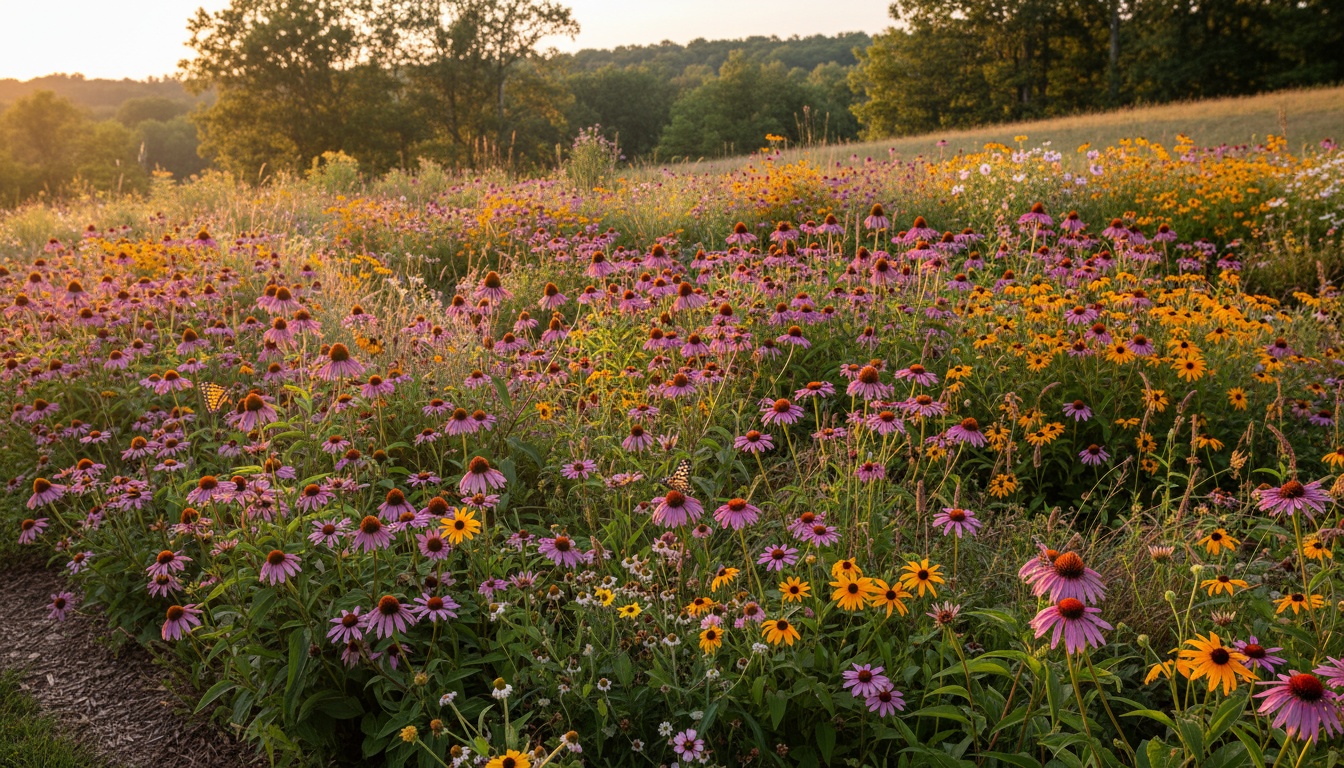
- Purple Coneflower (Echinacea purpurea) -- Blooms June through September, 2-4 feet tall. Thrives in average to poor soil and tolerates drought once established. Goldfinches feed on the seed heads through winter. One of the easiest natives to grow.
- Black-Eyed Susan (Rudbeckia fulgida 'Goldsturm') -- The workhorse of Virginia native gardens. Golden blooms from July to October, 2-3 feet tall. Spreads to form dense colonies that suppress weeds. Tolerates clay soil beautifully.
- Butterfly Weed (Asclepias tuberosa) -- Brilliant orange blooms June through August. Critical host plant for monarch butterflies. Requires well-drained soil -- amend heavy clay with gravel. Do not transplant once established; the deep taproot resents disturbance.
- Wild Bergamot (Monarda fistulosa) -- Lavender blooms July through September, 3-4 feet tall. A magnet for bumblebees, hummingbirds, and clearwing moths. More mildew-resistant than its cultivated cousin bee balm. Prefers drier conditions than most gardeners expect.
- Mountain Mint (Pycnanthemum muticum) -- Silver-frosted foliage, white blooms July through September, 2-3 feet tall. Possibly the single best pollinator plant for Virginia gardens. At peak bloom, a mountain mint patch will be covered in dozens of bee and wasp species. Deer leave it alone completely.
- Blue Star (Amsonia hubrichtii) -- Pale blue spring flowers give way to feathery, thread-like foliage that turns brilliant gold in autumn. Three-season interest in a 3-foot mound. Extremely long-lived and virtually maintenance-free.
- Blazing Star (Liatris spicata) -- Purple spikes bloom top-down in July and August, 3-4 feet tall. Excellent cut flower. Monarchs and swallowtails visit heavily. Tolerates wet clay better than most native perennials.
Shade and Part-Shade Perennials (2-4 Hours Sun)
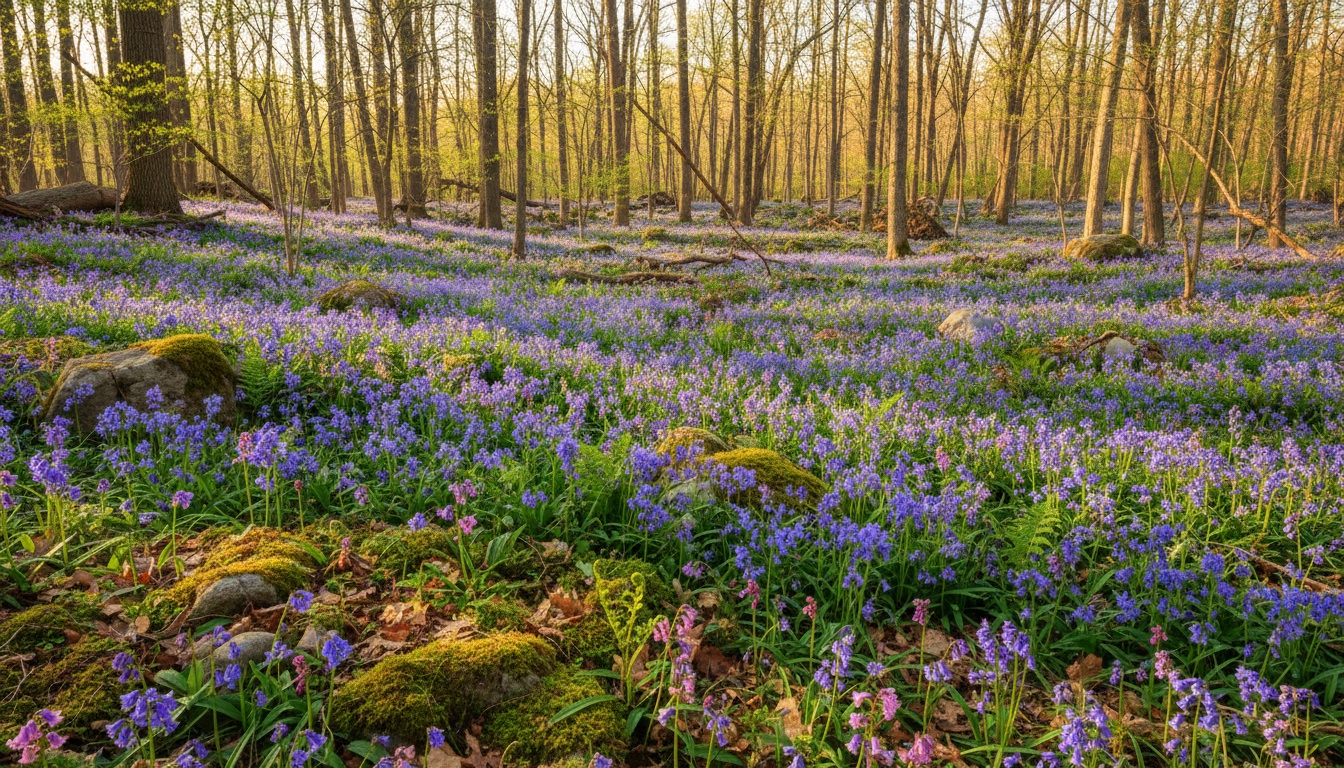
- Virginia Bluebells (Mertensia virginica) -- One of spring's most beautiful ephemeral wildflowers. Sky-blue bells in March and April, then the foliage dies back entirely by June. Plant with ferns or hostas to fill the gap. Thrives in moist woodland conditions.
- Wild Columbine (Aquilegia canadensis) -- Red and yellow flowers dangle from 2-foot stems April through June. Ruby-throated hummingbirds depend on this early nectar source. Self-seeds freely in rocky, well-drained shade.
- Christmas Fern (Polystichum acrostichoides) -- Evergreen fern, 1-2 feet tall. One of the most reliable groundcovers for dry shade under established trees -- a condition that challenges most plants. The fronds stay green through winter, hence the name.
- Wild Ginger (Asarum canadense) -- Heart-shaped leaves form a dense 6-inch groundcover in deep shade. Spreads slowly by rhizome. Deer-resistant. An excellent alternative to non-native pachysandra or vinca.
- Woodland Phlox (Phlox divaricata) -- Fragrant lavender-blue flowers in April and May, 12-15 inches tall. Naturalizes in light woodland shade. One of the most beautiful spring-blooming natives and a favorite of early-season butterflies.
- Foamflower (Tiarella cordifolia) -- Frothy white flower spikes April through May over heart-shaped foliage, 8-12 inches tall. Excellent evergreen groundcover for shade. The cultivar 'Brandywine' offers exceptional burgundy fall foliage.
Native Trees for Virginia Landscapes
Trees are the backbone of any landscape, and Virginia's native trees offer shade, wildlife habitat, fall color, and structural beauty that imported species simply cannot match. When selecting trees for your Charlottesville property, consider mature size, growth rate, and the specific conditions of your site.
Large Shade Trees
- White Oak (Quercus alba) -- The king of Virginia trees. Slow-growing but exceptionally long-lived (300+ years). Massive spreading crown, excellent fall color in wine-red and russet tones. Supports more insect species than any other North American tree genus. Plant where it has room to reach 80 feet tall and wide.
- Tulip Poplar (Liriodendron tulipifera) -- Virginia's state tree. Fast-growing (2-3 feet per year), reaching 70-90 feet. Distinctive tulip-shaped flowers in May. Excellent choice for homeowners who want shade quickly. Prefers deep, moist soil.
- American Beech (Fagus grandifolia) -- Smooth silver bark and golden-bronze fall foliage that persists into winter. Slow-growing but magnificent at maturity. Needs acidic soil and does not tolerate compacted or disturbed ground -- best for established properties with room to let it develop.
Ornamental Trees
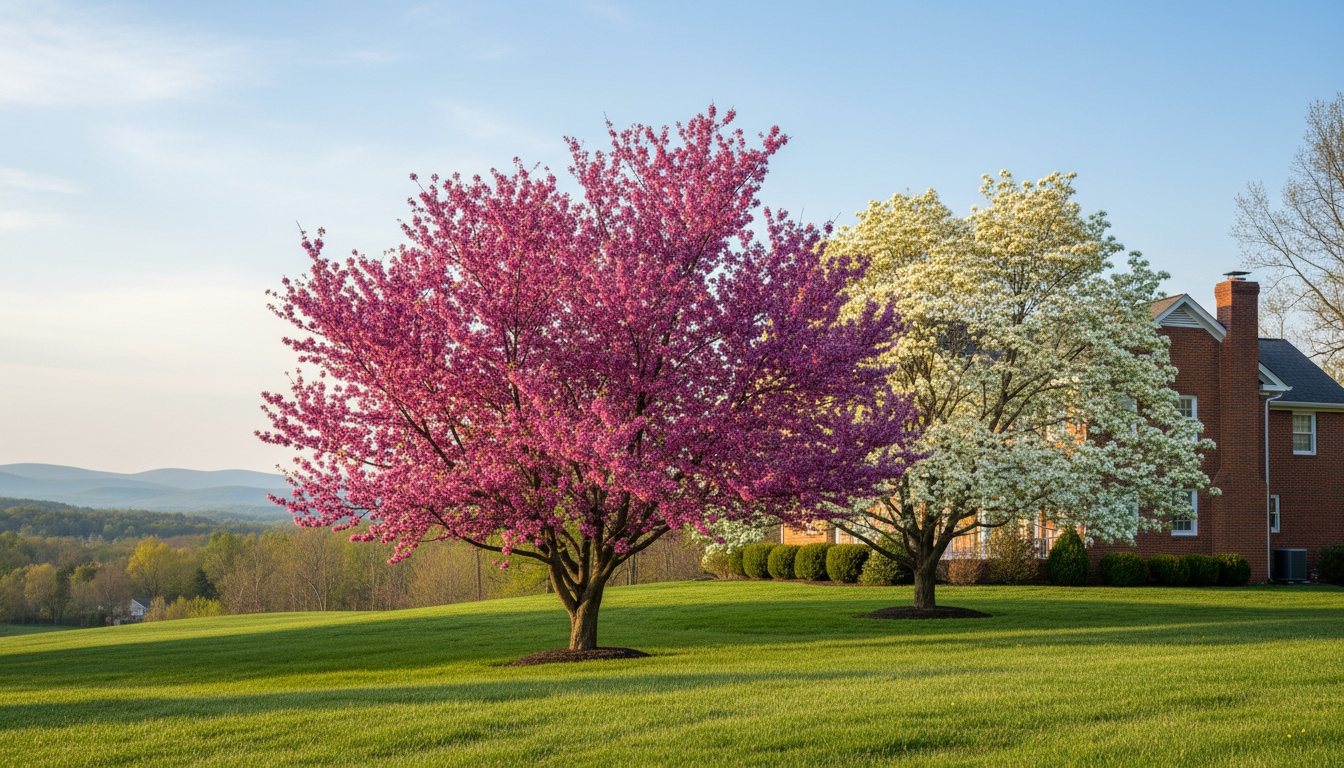
- Eastern Redbud (Cercis canadensis) -- Magenta flowers cover bare branches in early April, before the dogwoods bloom. Heart-shaped leaves turn yellow in fall. Grows 20-30 feet tall. Arguably the most beloved ornamental tree in Central Virginia, and for good reason.
- Flowering Dogwood (Cornus florida) -- The iconic Virginia understory tree. White or pink bracts in April, red berries in fall, and elegant horizontal branching. Grows 15-25 feet tall. Requires well-drained soil and some afternoon shade in Charlottesville's heat. Anthracnose-resistant cultivars like 'Appalachian Spring' are worth seeking out.
- Serviceberry (Amelanchier arborea) -- White flowers in early spring, edible blue berries in June, brilliant orange-red fall color, and attractive gray bark for winter interest. A true four-season tree at 15-25 feet tall. Birds love the berries.
Native Shrubs for Structure and Screening
- Virginia Sweetspire (Itea virginica) -- Fragrant white flower racemes in June, spectacular crimson fall foliage that persists into December. 3-6 feet tall. Tolerates wet sites and heavy clay. One of the best native shrubs for foundation plantings.
- Winterberry Holly (Ilex verticillata) -- Deciduous holly with brilliant red berries that persist on bare branches from November through February. Needs a male pollinator nearby. Tolerates wet soil. Stunning winter interest that no non-native shrub can rival.
- American Beautyberry (Callicarpa americana) -- Clusters of vivid magenta berries wrap the stems in September and October. 4-6 feet tall. Deer-resistant. Grows in sun to part shade. Cut back hard in late winter for the best berry display.
- Spicebush (Lindera benzoin) -- Tiny yellow flowers in very early spring (often March), followed by red berries. Host plant for the spicebush swallowtail butterfly. Aromatic foliage. Excellent choice for woodland edges and naturalized areas. 6-12 feet tall.
- Inkberry Holly (Ilex glabra) -- Evergreen native holly, 5-8 feet tall. Fine-textured foliage makes it an excellent substitute for boxwood in hedges and foundation plantings. Tolerates wet soil. The cultivar 'Shamrock' holds its lower foliage better than the straight species.
Deer-Resistant Native Plants
Deer pressure is a reality for nearly every garden in Charlottesville and Albemarle County. While no plant is truly deer-proof, the following natives are consistently avoided by deer in our area:
- Mountain Mint (Pycnanthemum muticum) -- Strongly aromatic; deer avoid it entirely
- Wild Ginger (Asarum canadense) -- Deer rarely browse; slugs are a bigger concern
- Christmas Fern (Polystichum acrostichoides) -- Deer do not eat ferns
- Spicebush (Lindera benzoin) -- Aromatic foliage deters browsing
- American Beautyberry (Callicarpa americana) -- Consistently avoided
- Blue Star (Amsonia hubrichtii) -- Milky sap makes it unpalatable
- Wild Bergamot (Monarda fistulosa) -- Strong mint fragrance deters deer
- Blazing Star (Liatris spicata) -- Rarely browsed in our area
- Hay-Scented Fern (Dennstaedtia punctilobula) -- Aggressive groundcover deer will not touch
A strategy that works well in heavily browsed areas: plant deer-resistant species on the perimeter of garden beds and more vulnerable plants (like coneflowers and phlox) toward the center, protected by the aromatic perimeter. This is not foolproof, but it reduces damage significantly.
Designing a Native Plant Garden
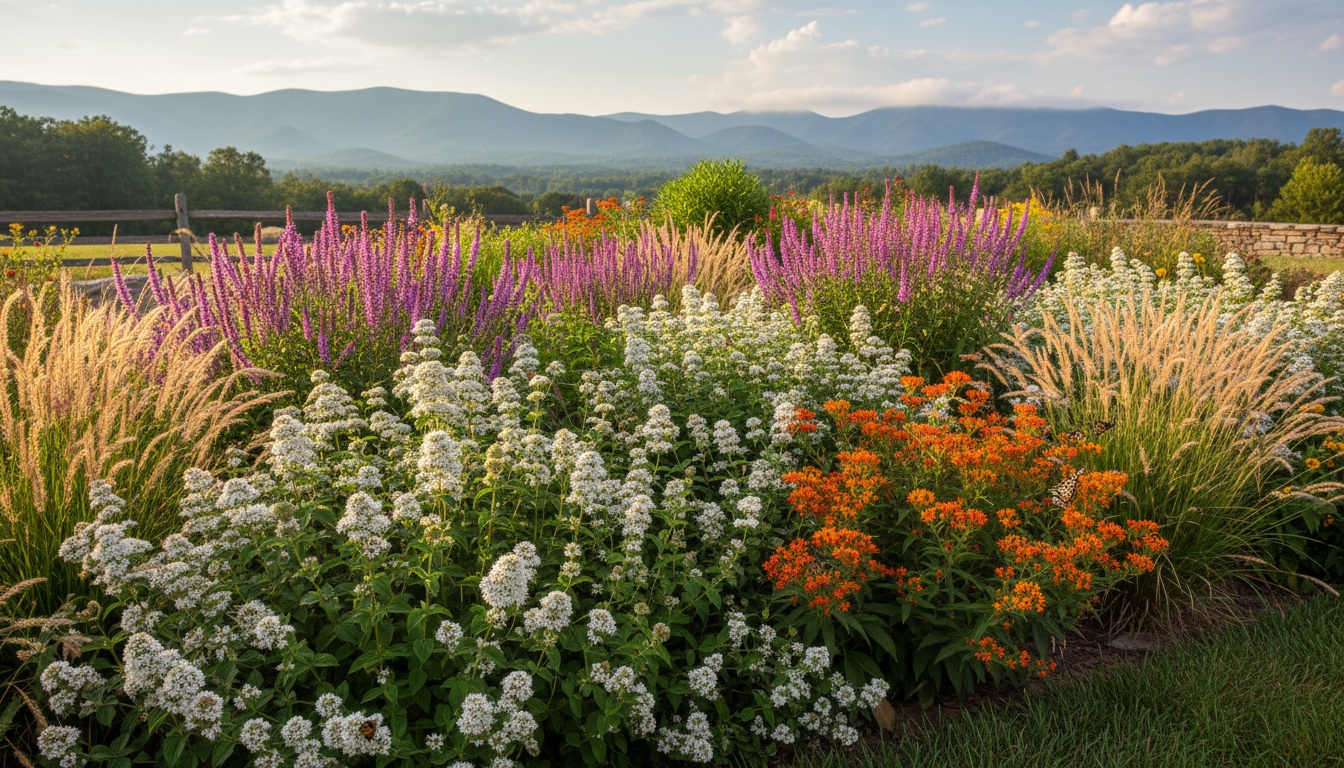
The most common mistake we see is planting natives the way you would plant traditional ornamentals -- one of each, evenly spaced, in a neat row. Native plants look best and perform best when planted in naturalistic drifts and communities, mimicking the way they grow in the wild.
Design Principles
- Plant in odd-numbered groups. Three, five, or seven of the same species create visual impact and allow plants to support each other. A single mountain mint is nice; a drift of seven is stunning.
- Layer by height. Place taller plants (4+ feet) at the back or center, mid-height plants (2-3 feet) in the middle, and groundcovers at the edges. This mimics natural plant communities and creates a lush, full look.
- Provide three-season bloom. Choose species that bloom in spring (columbine, phlox), summer (coneflower, mountain mint, blazing star), and fall (asters, goldenrod). Your garden should offer nectar from April through October.
- Include grasses. Native grasses like little bluestem (Schizachyrium scoparium) and switchgrass (Panicum virgatum) add movement, texture, and winter interest. They also provide nesting material and cover for birds.
- Leave seed heads standing through winter. Resist the urge to cut everything back in fall. Standing seed heads feed birds through winter and provide overwintering habitat for beneficial insects. Cut back in late February or early March before new growth emerges.
For homeowners who want a more structured approach, our landscape design team creates custom native plant plans that balance ecological function with the polished aesthetic that Central Virginia properties demand. We can design anything from a small pollinator border to a full-property native landscape.
Seasonal Planting Calendar for Virginia Natives
Timing matters. Central Virginia's long, hot summers and variable springs require strategic planting schedules.
Spring (March - May)
The primary planting window for most natives. Get perennials and shrubs in the ground by mid-May to give roots time to establish before summer heat. Container-grown trees can be planted through May. Spring is also the best time to divide and transplant existing native perennials.
Summer (June - August)
Avoid planting during this period if possible. If you must plant in summer, water deeply twice per week for the first two months and mulch heavily (3 inches of shredded hardwood). Morning planting is best -- avoid transplanting in afternoon heat.
Fall (September - November)
The second-best planting window and arguably the best time for trees and shrubs. Soil is still warm, which encourages root growth, but air temperatures are cooling and rainfall typically increases. Plants installed in September and October develop strong root systems over winter and hit the ground running the following spring.
Winter (December - February)
Balled-and-burlapped trees can be planted when the ground is not frozen. This is also planning season -- the best time to visit our nursery, review plant options, and design your spring installation.
Where to Buy Native Plants in Charlottesville
Source matters when buying native plants. Plants grown from local or regional seed stock are better adapted to Central Virginia conditions than those grown from seed collected hundreds of miles away. Look for nurseries that grow their own stock or source from regional growers.
Our seven-acre nursery on Avon Street Extended carries the largest selection of Virginia native plants in the Charlottesville area. We grow many of our natives on-site and source the rest from Virginia and Mid-Atlantic regional growers. Our horticulturists can help you select the right species for your specific conditions -- soil type, sun exposure, moisture level, and deer pressure.
We also recommend supporting the Virginia Native Plant Society's annual plant sales, held each spring and fall, which offer hard-to-find species at reasonable prices.
Getting Started
You do not need to convert your entire landscape to natives overnight. Start with one bed. Replace a patch of turf grass with a native pollinator garden. Swap out a row of non-native shrubs for Virginia sweetspire or inkberry holly. Add a redbud or serviceberry where you were considering a non-native ornamental.
Every native plant you add is a step toward a landscape that works with Central Virginia's climate rather than fighting it -- one that feeds pollinators, conserves water, and connects your property to the larger ecological fabric of the Piedmont.
Ready to start planning your native plant garden? Contact our team for a consultation, or visit our nursery seven days a week to browse our current native plant selection.