
An outdoor kitchen transforms your backyard from a place where you grill burgers into a space where you actually cook, entertain, and live. In Central Virginia, where the outdoor season stretches from late March through November and mild winter days invite impromptu cookouts even in January, an outdoor kitchen is one of the most used and most valued additions you can make to your property.
Snow's has been building outdoor living spaces in Charlottesville and Albemarle County for over a century. Our outdoor living team has designed and installed kitchens ranging from simple grill stations on Belmont patios to full resort-caliber cooking complexes on Ivy estate properties. This guide covers the design decisions, material choices, and practical considerations that separate a great outdoor kitchen from one that looks good in a magazine but does not work in real life.
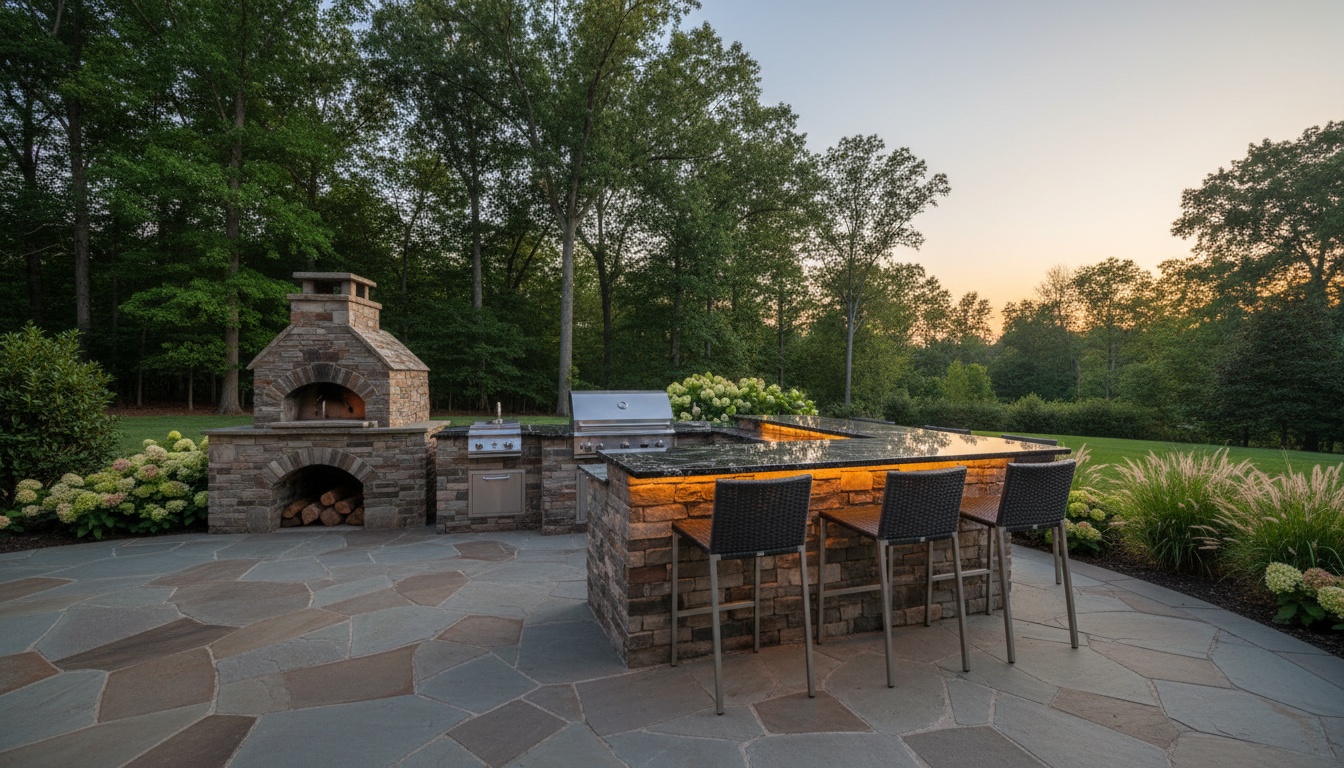
Layout Types: Choosing the Right Configuration
The layout of your outdoor kitchen determines how efficiently you cook, how comfortably guests interact with the space, and how much room the kitchen consumes on your patio. There is no single best layout -- the right one depends on your available space, how you cook, and how many people you typically entertain.
Linear (Single-Wall) Layout
All appliances and counter space arranged in a single straight line, typically 8-12 feet long. This is the most space-efficient layout and works well on narrow patios or as a cooking station along a property wall or fence. The linear layout keeps the cook facing the same direction, which means you need to decide whether you want to face the yard (social) or face a wall (utilitarian). For most homeowners, facing the yard is the better choice -- you stay connected to the gathering while you cook.
Best for: Smaller patios, budget-conscious projects, properties where space is limited. Typical cost range: $12,000-$25,000 installed.
L-Shaped Layout
The most popular outdoor kitchen layout. Two perpendicular runs create a natural work triangle (grill, prep area, sink) and provide bar seating along one arm. The L-shape defines the kitchen zone without enclosing it, and the open corner gives the cook sightlines in two directions. Position the grill at one end and the sink at the other, with prep counter between them. The bar-seating arm should face the patio or yard so guests feel included.
Best for: Medium to large patios, homeowners who entertain regularly. This layout balances function and social flow better than any other configuration. Typical cost range: $20,000-$45,000 installed.
U-Shaped Layout
Three-sided kitchen with the cook surrounded by counter, appliances, and storage. The U-shape provides the most counter space and the most efficient workflow -- everything is within arm's reach. However, it creates a more enclosed cooking area that can feel separated from the rest of the patio. Solve this by keeping one arm low (counter height without an upper structure) to maintain visual connection to the gathering area.
Best for: Serious cooks, large patios, properties where the outdoor kitchen is the primary entertaining feature. Typical cost range: $35,000-$70,000 installed.
Island Layout
A freestanding kitchen island positioned in the center or off to one side of the patio, accessible from all sides. Islands work well as the anchor of an open-plan outdoor space. They are also the best layout for keeping the cook facing guests. The challenge is running utilities (gas, water, electric) to a freestanding structure, which may require trenching across the patio. Plan utility runs before the patio is built, not after.
Best for: Open patio designs, social cooks who want 360-degree interaction. Typical cost range: $15,000-$35,000 installed.
Essential Appliances
Start with what you will actually use and resist the temptation to install every appliance in the catalog. An outdoor kitchen with a great grill, adequate counter space, and a reliable sink will outperform one with twelve appliances and nowhere to set a plate.
- Grill: The centerpiece. A built-in gas grill (36 inches minimum, 42 inches preferred) with at least three burners provides the cooking flexibility most homeowners need. Brands like Lynx, Twin Eagles, and DCS offer commercial-grade performance and weather resistance. Budget $3,000-$8,000 for a quality built-in grill.
- Side burner: Essential for sauces, sides, and anything you would normally cook on a stovetop. A single or double side burner mounted in the counter keeps you from running back to the indoor kitchen. $500-$1,500.
- Sink: An outdoor sink with running water changes the cooking experience dramatically. Prep, clean, rinse -- without walking inside. A single-basin stainless steel sink with hot and cold water is sufficient. Requires a water supply line and drain connection. $800-$2,000 installed with plumbing.
- Refrigeration: An undercounter outdoor-rated refrigerator keeps drinks and ingredients cold at the point of use. Outdoor refrigerators are built to operate in temperature extremes that would damage a standard indoor unit. $1,500-$3,500.
- Storage: Stainless steel access doors and drawers built into the island provide storage for utensils, charcoal, covers, and cleaning supplies. Plan at least two access doors and one drawer bank. $500-$2,000 for a typical set.
Advanced Additions
Once the essentials are covered, consider these based on how you cook:
- Smoker or pellet grill: Central Virginia has a deep barbecue culture, and a built-in smoker lets you run low-and-slow cooks without monopolizing the main grill. $2,000-$5,000.
- Pizza oven: Wood-fired or gas pizza ovens reach 700-900 degrees and cook a pizza in 90 seconds. They also roast vegetables, bake bread, and sear steaks at temperatures no grill can match. Freestanding or built-in options. $3,000-$10,000.
- Kegerator or beverage dispenser: For homeowners who entertain frequently, a built-in draft system is a crowd-pleasing addition. $1,500-$3,000.
- Warming drawer: Keeps finished dishes at serving temperature while you finish cooking. Especially useful when cooking for large groups. $1,000-$2,500.
Countertop Materials
Your outdoor kitchen countertop faces conditions that would destroy most indoor surfaces -- UV exposure, rain, freeze-thaw cycles, grease, and red wine. Material choice matters more here than anywhere else in your home.
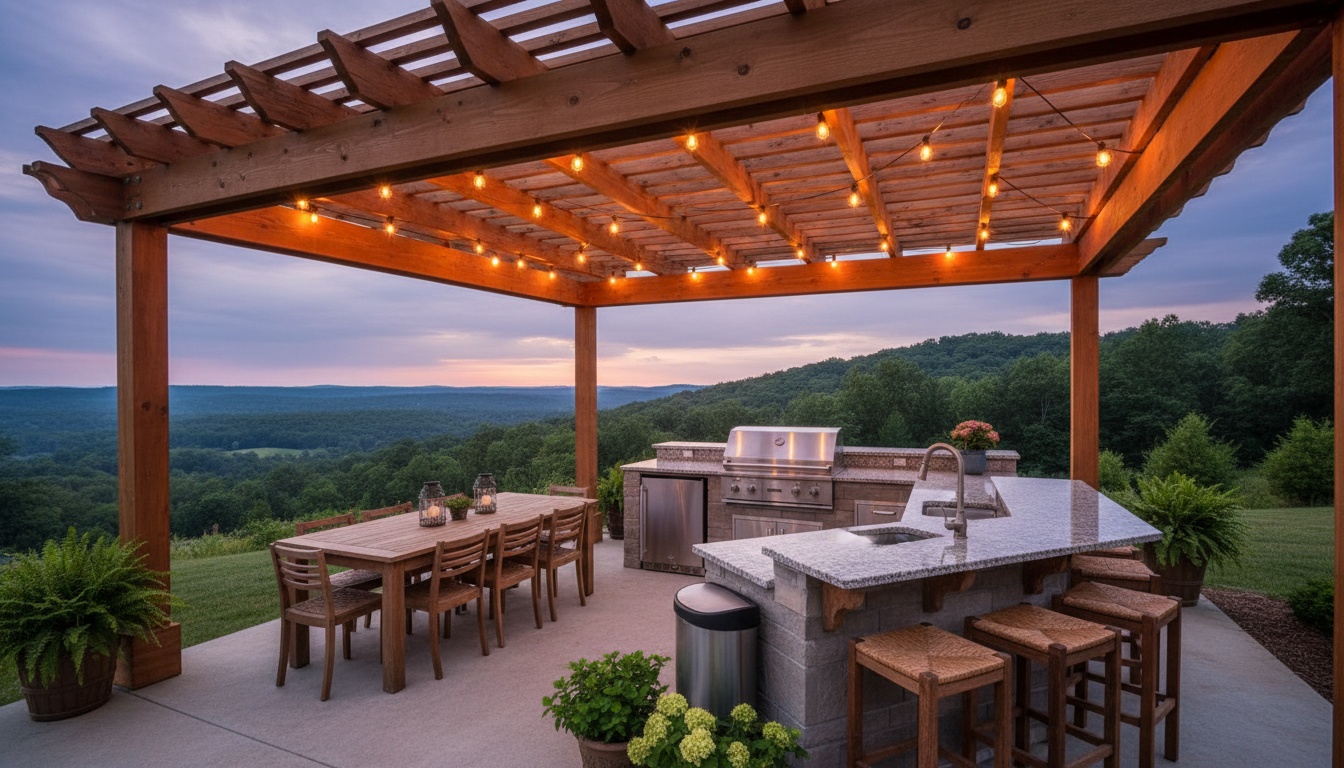
- Granite: The gold standard for outdoor kitchens. Dense, heat-resistant, stain-resistant (when sealed), and available in dozens of colors and patterns. Granite handles Virginia's freeze-thaw cycles without issue and shrugs off hot pans from the grill. Seal it annually. $60-$120 per linear foot installed.
- Concrete: Custom-poured concrete countertops offer unlimited shape and color options. They can be formed to any configuration and stained or pigmented to match your design palette. Concrete requires sealing and will develop a patina over time. Some homeowners love the aged look; others prefer the consistency of granite. $70-$130 per linear foot.
- Bluestone: A natural stone option that ties the countertop to a bluestone patio. Thermal-finished bluestone provides a smooth, slightly textured surface. It is more porous than granite and stains more easily, but it ages beautifully. $50-$90 per linear foot.
- Tile: Porcelain or natural stone tile on a concrete backer board. Lower material cost than slab stone, but the grout lines require maintenance and can harbor grease and grime. Best for Mediterranean and Spanish-style designs. $30-$60 per linear foot.
- Stainless steel: Commercial-grade stainless steel is hygienic, heat-proof, and maintenance-free. It looks best in modern and industrial-style outdoor kitchens. It will show fingerprints and water spots. $80-$150 per linear foot.
Shelter and Shade
An outdoor kitchen without some form of overhead cover is usable only in perfect weather. In Virginia, where summer thunderstorms arrive without much warning and the August sun can make standing over a grill genuinely unpleasant, shelter extends your cooking season and protects your investment.
Pergola
A timber or aluminum pergola provides partial shade and defines the kitchen zone architecturally. Pergolas do not block rain, but they reduce direct sun significantly and provide a framework for string lights, fans, and climbing plants like Carolina jessamine or crossvine. Cedar and pressure-treated pine are the most common materials for Virginia pergolas. Cost: $8,000-$20,000 depending on size and material.
Covered Patio or Pavilion
A fully roofed structure with a solid ceiling. This is the premium option -- it keeps rain off the kitchen, supports ceiling fans and recessed lighting, and creates a true outdoor room. A covered pavilion also protects appliances from weather exposure, extending their lifespan. The structure needs to be engineered for local wind and snow loads. Cost: $25,000-$60,000+.
Retractable Awning or Shade Sail
A more budget-friendly shade option. Retractable awnings mount to the house wall and extend over the kitchen when needed. Shade sails are tensioned fabric panels anchored to posts or the house. Neither provides rain protection at the level of a solid roof, but both significantly reduce sun exposure. Cost: $3,000-$10,000.
Connecting to Fire Features
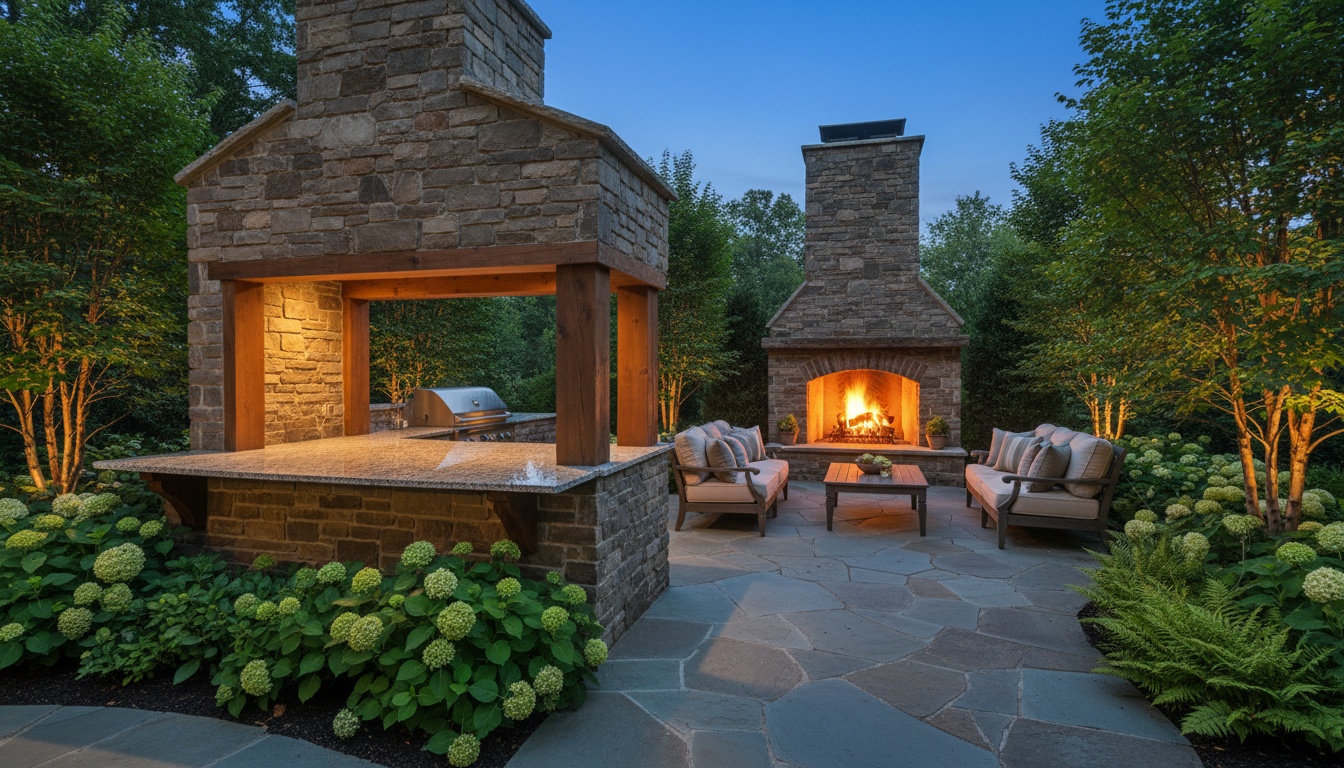
Outdoor kitchens and fire features are natural companions. A fire pit or fireplace positioned near (but not adjacent to) the kitchen creates a two-zone outdoor living space: one for cooking and dining, one for lounging and conversation. The key is designing the two as a connected experience rather than isolated features.
- Gas fire table integrated into the kitchen bar: A linear gas burner set into the bar countertop provides warmth and ambiance for guests seated at the kitchen. This works especially well with L-shaped and U-shaped layouts where the bar arm faces the seating area.
- Freestanding fire pit 15-20 feet from the kitchen: Creates a separate lounge zone that draws guests away from the cooking area after dinner. Connect the two zones with a shared patio surface and consistent materials.
- Outdoor fireplace on an adjacent wall: Provides a vertical focal point and a defined lounge area flanking the kitchen. The fireplace can share the same stone veneer as the kitchen island for visual cohesion.
If you are running a natural gas line to the kitchen for the grill, extending it to a gas fire feature adds relatively little to the overall cost ($500-$1,500 for additional gas line) and dramatically expands the space's functionality. Plan both connections during the initial build.
Budget Ranges
Outdoor kitchen costs in the Charlottesville area vary widely based on size, materials, appliance selection, and site conditions. Here is what to expect at each level:
- Entry level ($12,000-$20,000): Linear layout, quality built-in grill, granite or concrete countertop, stone veneer base, basic storage. No plumbing. A solid cooking station that elevates your outdoor experience significantly over a freestanding grill.
- Mid-range ($20,000-$45,000): L-shaped layout, grill, side burner, sink with running water, undercounter refrigerator, granite countertop, stone veneer, landscape lighting. The sweet spot for most Charlottesville homeowners -- full cooking functionality with an attractive, durable design.
- Premium ($45,000-$80,000): U-shaped or large L-shaped layout, premium grill, smoker or pizza oven, full plumbing, multiple refrigeration units, pergola or covered structure, integrated fire feature, custom lighting. A complete outdoor entertaining complex.
- Estate ($80,000+): Fully covered pavilion, commercial-grade appliances, multiple cooking stations, bar with draft system, fireplace, premium materials throughout. Designed for properties where the outdoor kitchen is a primary entertaining feature.
Virginia Building Considerations
Before breaking ground on an outdoor kitchen in Charlottesville or Albemarle County, be aware of these local requirements:
- Building permits: Any outdoor kitchen with gas, electrical, or plumbing connections requires a building permit in Albemarle County and the City of Charlottesville. Structures with a roof (pergolas may be exempt depending on size) require a separate structural permit. We handle all permitting as part of our project management.
- Gas line requirements: Natural gas connections must be installed by a licensed plumber and inspected by the local building department. Propane installations require compliance with NFPA 58 setback distances from the tank to the structure. Your existing gas meter may need an upgrade to handle the additional BTU load of a grill, fire feature, and side burner.
- Setbacks: Albemarle County requires structures (including covered outdoor kitchens) to comply with zoning setbacks from property lines. Typically 25 feet from the rear property line and 15 feet from side property lines, though this varies by zoning district. Uncovered islands on a patio may not be subject to setback requirements, but verify with the county before designing.
- HOA restrictions: Neighborhoods like Glenmore, Old Trail, Dunlora, and Key West have architectural review committees that must approve outdoor kitchen designs. Submit plans early -- some review cycles take 4-6 weeks.
- Drainage and grading: Virginia's red clay soils require careful grading around outdoor kitchens to prevent water pooling on the patio surface. Our projects include grading plans that direct stormwater away from the kitchen and house foundation.
- Winter preparation: Plumbing lines to outdoor kitchens must be winterized in Central Virginia. We install shut-off valves and drain ports that allow you to blow out the lines before freezing temperatures arrive. Failure to winterize will result in burst pipes and expensive repairs.
Getting Started
The most successful outdoor kitchen projects begin with a site visit and a conversation about how you actually cook and entertain. A chef who smokes brisket every weekend needs a different kitchen than a family that grills three nights a week. A couple who hosts intimate dinner parties needs a different layout than one that throws neighborhood block parties.
Our outdoor living design team will evaluate your site conditions, discuss your cooking style and entertaining habits, and develop a design that fits your property and your budget. We coordinate all trades -- masonry, plumbing, gas, electrical, and landscape -- so you have a single point of contact from design through completion.
Contact Snow's to schedule a site visit and start designing your outdoor kitchen. We build year-round in Central Virginia, and most outdoor kitchen projects are completed in four to eight weeks once materials are sourced.