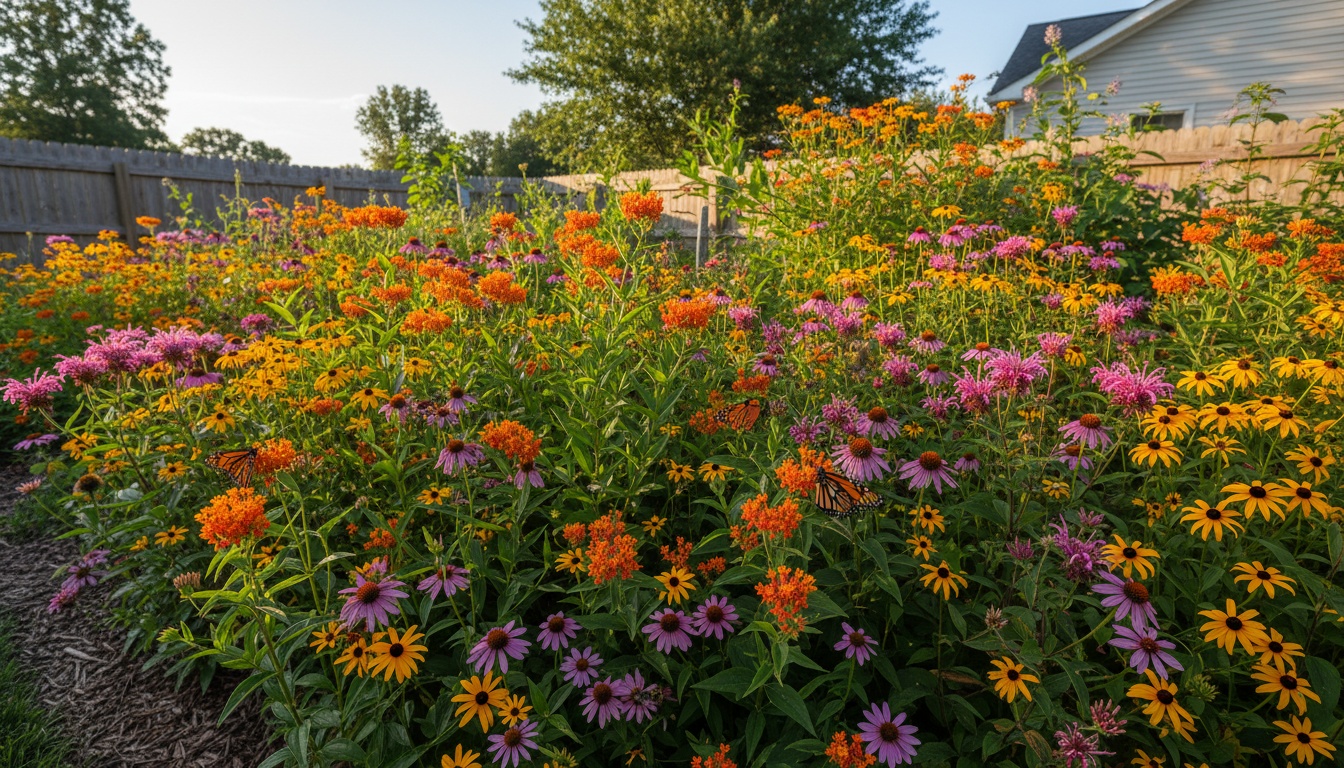
Virginia is home to more than 450 species of native bees, over 170 species of butterflies, and countless moths, beetles, flies, and wasps that pollinate our crops, wildflowers, and garden plants. These populations are declining. Habitat loss, pesticide exposure, and the replacement of native plant communities with turf grass and non-native ornamentals have reduced pollinator numbers across the state by an estimated 40% over the past two decades.
The good news is that homeowners can make a meaningful difference. A single well-designed pollinator garden -- even a small one -- provides nectar, pollen, and habitat that sustains hundreds of individual pollinators through the growing season. Multiply that across a neighborhood, and you create a pollinator corridor that connects fragmented habitats and helps populations recover.
At Snow Knows, we have been growing and selling native plants in Charlottesville since 1912. This guide draws on our experience with Central Virginia soils, climate, and native flora to help you design a pollinator garden that actually works -- one that blooms continuously from early spring through late fall and supports the specific pollinator species that live in the Virginia Piedmont.
Why Pollinators Need Help
The core problem is simple: pollinators evolved to feed on native plants, and we have removed most of the native plants from our landscapes. A typical suburban yard in Charlottesville is 80-90% turf grass (which provides zero pollinator value) ringed by non-native ornamental shrubs and a few flowering annuals imported from other continents. This is the ecological equivalent of a food desert.
Native bees are particularly vulnerable because many are specialists -- they can only feed on pollen from specific native plant families. The squash bee feeds on cucurbit flowers. Mining bees depend on spring-blooming native trees and wildflowers. When those plants disappear from the landscape, the bees that depend on them disappear too.
Monarch butterflies, once abundant across Virginia, have declined by approximately 80% since the 1990s. The cause is primarily loss of milkweed (Asclepias species), the only plant genus on which monarchs can lay eggs and the only food source for monarch caterpillars. Every milkweed plant you add to your garden directly supports monarch reproduction.
Building a pollinator garden is not sentimental. Pollinators are responsible for one out of every three bites of food we eat. They pollinate $15 billion worth of crops in the United States annually. Supporting them is practical, ecological, and -- when you see a garden full of swallowtails and bumblebees on a July afternoon -- deeply satisfying.
Best Native Pollinator Plants for Virginia
The key to a successful pollinator garden is continuous bloom -- providing nectar and pollen from the first warm days of March through the last asters of November. The following plants are native to the Virginia Piedmont, proven in Zone 7a, and selected for their pollinator value. They are organized by bloom season so you can ensure your garden has no gaps.
Early Spring (March through April)
- Virginia Bluebells (Mertensia virginica): Sky-blue bells on 12-18 inch stems. One of the first major nectar sources for emerging bumblebees. Thrives in moist, shaded conditions. Goes dormant by June -- plant with ferns to fill the gap.
- Wild Columbine (Aquilegia canadensis): Red and yellow flowers on 2-foot stems. The primary early nectar source for ruby-throated hummingbirds returning from migration. Also visited by long-tongued bees. Grows in rocky, well-drained part shade.
- Golden Ragwort (Packera aurea): Bright yellow daisy-like flowers on 18-inch stems. One of the earliest composites to bloom, providing pollen for small native bees emerging from winter dormancy. Semi-evergreen groundcover for moist shade.
- Spicebush (Lindera benzoin): Tiny yellow flowers cluster on bare branches in March. Host plant for the spicebush swallowtail butterfly. A 6-12 foot shrub for woodland edges.
Late Spring (May through June)
- Butterfly Weed (Asclepias tuberosa): Brilliant orange flower clusters on 2-foot stems. A milkweed species critical for monarch butterflies -- both as a nectar source and a larval host plant. Requires well-drained soil. Amend heavy clay with gravel before planting.
- Wild Bergamot (Monarda fistulosa): Lavender tubular flowers in dense heads, 3-4 feet tall. A magnet for bumblebees, hummingbird clearwing moths, and dozens of other pollinator species. More drought-tolerant and mildew-resistant than garden bee balm.
- Woodland Phlox (Phlox divaricata): Fragrant lavender-blue flowers, 12-15 inches tall. Visited by early-season butterflies including the eastern tiger swallowtail. Naturalizes in light shade.
- Baptisia (Baptisia australis): Blue-purple spikes on a 3-4 foot shrub-like perennial. Fixes nitrogen in the soil. Visited by bumblebees. Extremely long-lived and deer-resistant.
Summer (July through August)
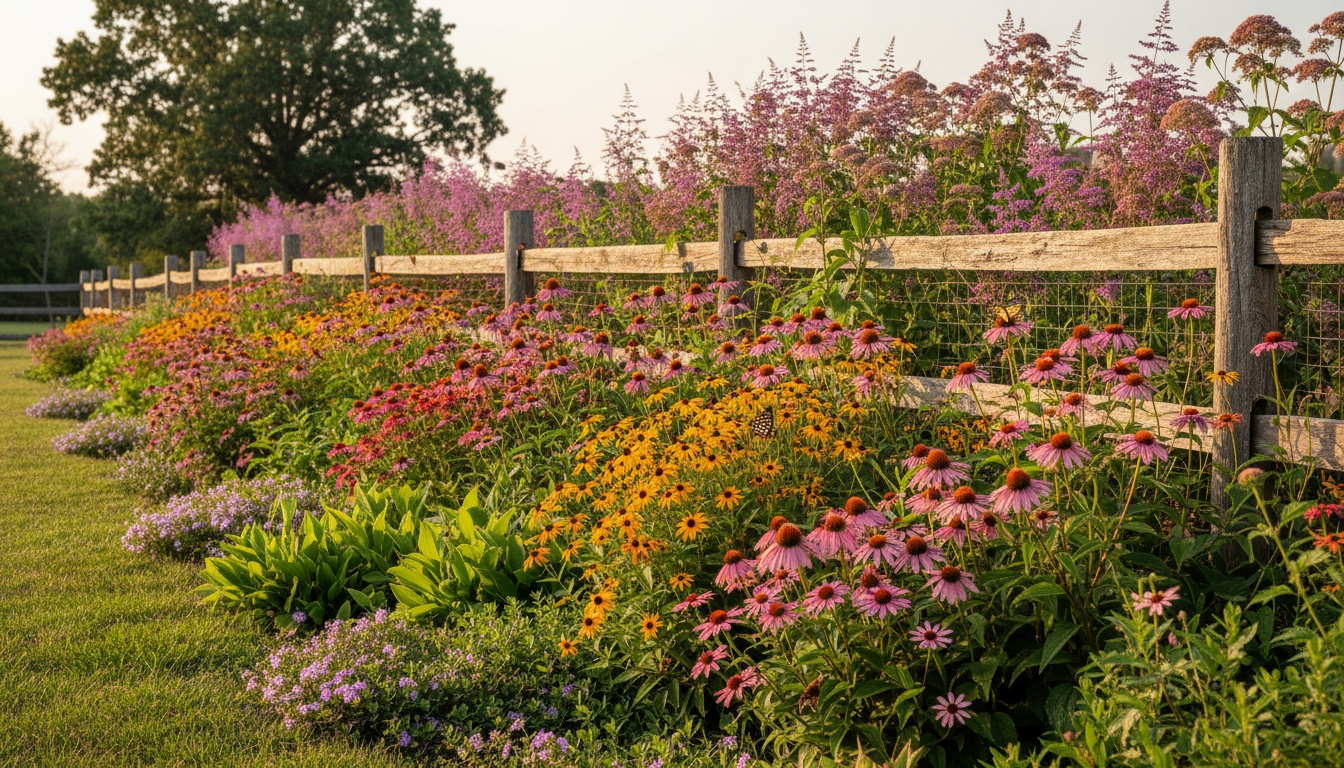
- Purple Coneflower (Echinacea purpurea): Pink-purple daisy flowers on 2-4 foot stems. Blooms for two months. Visited by dozens of bee and butterfly species. Goldfinches feed on seed heads through winter. The backbone of any Virginia pollinator garden.
- Mountain Mint (Pycnanthemum muticum): Silver-frosted foliage and small white flowers, 2-3 feet tall. Possibly the single most productive pollinator plant for the Mid-Atlantic region. At peak bloom, a patch of mountain mint will host more individual pollinators than any other plant in the garden. Deer-proof.
- Swamp Milkweed (Asclepias incarnata): Pink flower clusters on 3-4 foot stems. Another critical monarch host plant that tolerates (and prefers) wetter conditions than butterfly weed. Excellent for rain gardens and low spots.
- Blazing Star (Liatris spicata): Purple spikes that bloom from the top down, 3-4 feet tall. A monarch and swallowtail favorite. Tolerates wet clay better than most native perennials.
- Black-Eyed Susan (Rudbeckia fulgida): Golden daisy flowers, 2-3 feet tall. Blooms for months. Supports a wide range of small native bees and beneficial flies. Thrives in Virginia clay.
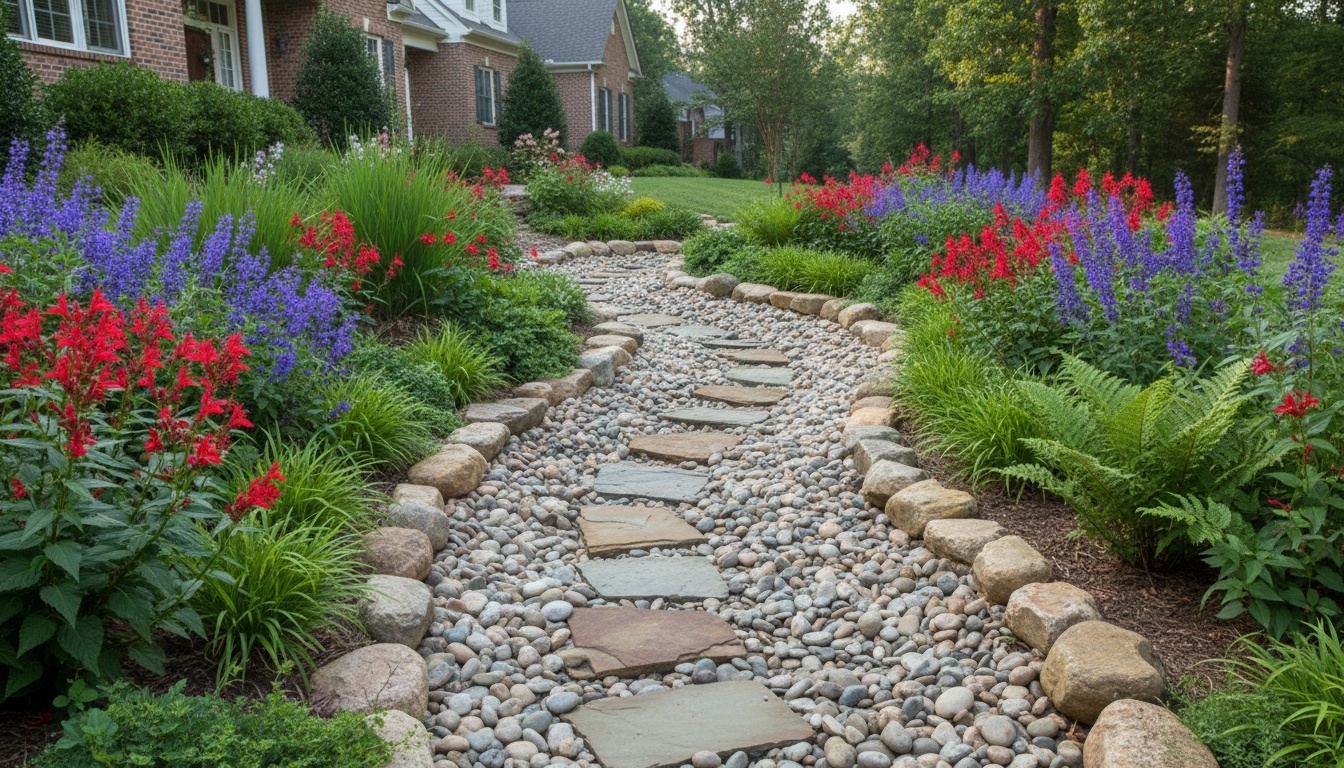
- Cardinal Flower (Lobelia cardinalis): Scarlet red spikes, 3-4 feet tall. The premier hummingbird plant for Virginia. Also visited by swallowtail butterflies. Requires consistently moist soil -- perfect for stream edges and rain gardens.
Fall (September through November)
- New England Aster (Symphyotrichum novae-angliae): Purple-pink daisy flowers in dense clusters, 3-5 feet tall. Blooms September through frost. Critical late-season fuel for migrating monarchs and native bees preparing for winter. The most important fall pollinator plant in the region.
- Goldenrod (Solidago species): Golden plumes, 3-5 feet tall. Contrary to popular belief, goldenrod does not cause allergies (ragweed, which blooms simultaneously, is the culprit). Goldenrod is one of the most ecologically important native plants, supporting over 100 pollinator species. Wreath goldenrod (S. caesia) works well in shade.
- Aromatic Aster (Symphyotrichum oblongifolium): Lavender-blue flowers on a compact 2-foot mound. Blooms October through November -- one of the last plants standing. Critical for late-season pollinators. Extremely drought-tolerant.
- Joe-Pye Weed (Eutrochium purpureum): Massive pink-purple flower heads on 5-7 foot stems. A monarch and swallowtail magnet. Dramatic presence in the back of a border. Prefers moist conditions but tolerates average garden soil.
Design Principles for Pollinator Gardens
A pollinator garden is not a random collection of native plants. Effective gardens are designed with specific principles that maximize pollinator use and create a landscape that looks intentional.
Plant in Drifts, Not Singles
Pollinators are more efficient when they can visit multiple flowers of the same species in one foray. A single coneflower is a snack stop; a drift of seven coneflowers is a destination. Plant at least three of each species (five or seven is better) in naturalistic groupings rather than one-of-each rows. Odd numbers create more natural-looking arrangements.
Layer by Height
Arrange plants in layers: tall species (4-7 feet) like Joe-Pye weed and ironweed at the back, mid-height species (2-4 feet) like coneflower and mountain mint in the middle, and low species (under 2 feet) like golden ragwort and woodland phlox at the front. This layering mimics natural plant communities and ensures every plant gets adequate sunlight.
Plan for Continuous Bloom
Review your plant list and confirm that at least two to three species are blooming in every month from March through November. The most common pollinator garden mistake is loading up on summer bloomers (coneflowers and black-eyed Susans) while leaving spring and fall bare. Early and late pollinators need food too -- and they have fewer options.
Include Host Plants, Not Just Nectar
Nectar feeds adult butterflies and bees. But caterpillars need host plants -- specific species on which they can lay eggs and feed. Milkweed for monarchs, spicebush for spicebush swallowtails, violets for fritillaries, and asters for pearl crescents. A garden with only nectar plants is a restaurant; a garden with host plants is a nursery. Include both.
Leave Some Mess
Pollinators need more than flowers. Native bees nest in bare soil, hollow stems, and leaf litter. Leave a small patch of unmulched ground for ground-nesting bees. Do not cut back perennial stems until late February -- many native bees overwinter in hollow stems. Leave fallen leaves in garden beds where possible. A perfectly manicured garden is a poor pollinator habitat.
Rain Garden Integration
A rain garden is a shallow depression designed to capture and filter stormwater runoff from roofs, driveways, and lawns. Planted with moisture-loving natives, a rain garden serves double duty: it manages stormwater (reducing runoff pollution into Virginia's streams and the Chesapeake Bay) and provides pollinator habitat in a part of your yard that might otherwise be a soggy problem area.
Central Virginia's red clay soils and increasing storm intensity make rain gardens especially valuable. Albemarle County and the City of Charlottesville both encourage rain garden installation as part of stormwater management best practices.
Best Pollinator Plants for Virginia Rain Gardens
- Swamp Milkweed (Asclepias incarnata): Tolerates wet feet and periodic standing water. Monarch host plant.
- Cardinal Flower (Lobelia cardinalis): Thrives at rain garden edges where moisture is consistent.
- Blue Flag Iris (Iris versicolor): Native iris with purple-blue flowers in May. Spreads by rhizome to stabilize rain garden banks.
- Joe-Pye Weed (Eutrochium purpureum): Massive pollinator magnet that thrives in moist conditions.
- Ironweed (Vernonia noveboracensis): Deep purple flowers in August and September on 5-7 foot stems. Butterflies cover it.
- Sedges (Carex species): Native sedges stabilize the rain garden floor and provide habitat for ground-nesting bees. Fox sedge (C. vulpinoidea) and palm sedge (C. muskingumensis) are top choices.
Position the rain garden at least 10 feet from your foundation and downhill from the water source (downspout, driveway, or lawn slope). A typical residential rain garden is 100-300 square feet and 6-8 inches deep. Our landscape design team can size and position a rain garden based on your property's drainage patterns.
Common Mistakes
After decades of helping Charlottesville-area homeowners build pollinator gardens, these are the errors we see most often:
- Planting non-native "pollinator" plants: Butterfly bush (Buddleia), while attractive to adult butterflies, is invasive in Virginia and provides no larval food. It is a trap -- pollinators visit it but cannot reproduce on it. Stick with true natives.
- Using pesticides nearby: Neonicotinoid insecticides (common in lawn and garden treatments) are lethal to bees at sub-lethal doses. If you spray your lawn with systemic insecticides, the pollinator garden next to it is undermined. Go organic within 50 feet of pollinator plantings.
- Not enough sun: Most pollinator perennials need at least 6 hours of direct sun. A pollinator garden in full shade will not bloom reliably. If your only available space is shaded, focus on spring ephemerals (bluebells, columbine) and shade-tolerant species (golden ragwort, woodland phlox).
- Overwatering: Once established (after one full growing season), most native pollinator plants need no supplemental irrigation. Their root systems are adapted to Virginia's rainfall patterns. Overwatering encourages fungal disease and weakens root development.
- Cutting back too early: Many native bees and beneficial insects overwinter in the hollow stems of perennials and in the leaf litter beneath them. If you cut everything down in October and blow out the leaves, you are destroying overwintering habitat. Wait until late February or early March to cut back, after winter temperatures have released overwintering insects.
- Giving up too soon: A newly planted pollinator garden looks sparse in year one, promising in year two, and magnificent by year three. Native perennials invest their first year in root development -- the show happens above ground once the roots are established. Be patient.
Getting Started
You do not need a large property or a big budget to make a difference. A 50-square-foot patch of native pollinator plants in full sun -- converted from turf grass -- will support hundreds of individual pollinators through a single season. Start with five to seven species that cover the full bloom season, plant them in drifts, and resist the urge to keep things too tidy.
Our nursery on Avon Street Extended stocks the largest selection of native pollinator plants in the Charlottesville area, grown from regional seed sources for best adaptation to local conditions. Our horticulturists can help you select species matched to your specific site -- sun exposure, soil type, moisture level, and deer pressure.
For homeowners who want a designed pollinator garden integrated into their existing landscape, our landscape design team creates custom pollinator planting plans that balance ecological function with the kind of aesthetic cohesion that makes a garden look intentional and beautiful.
Contact Snow's to start planning your pollinator garden. The pollinators are already out there, waiting for a place to land.